What Makes Cretan Olive Oil So Special
Cretan olive oil is special because of where it grows. The island’s long, dry summers, mild winters and steep, uneven terrain produce small, intensely flavoured olives, many of them from old trees in traditional groves, and the oil they give is among the most consistently fine in the Mediterranean. Crete is also unusual in how much its oil varies: the landscape and its many microclimates give oil from the west a different character from oil from the east, and the north coast from the south. What unites the best of it is quality. Cretan oil is overwhelmingly extra virgin, and much of it has an acidity far below the legal limit.
What Makes Cretan Olive Oil Different?
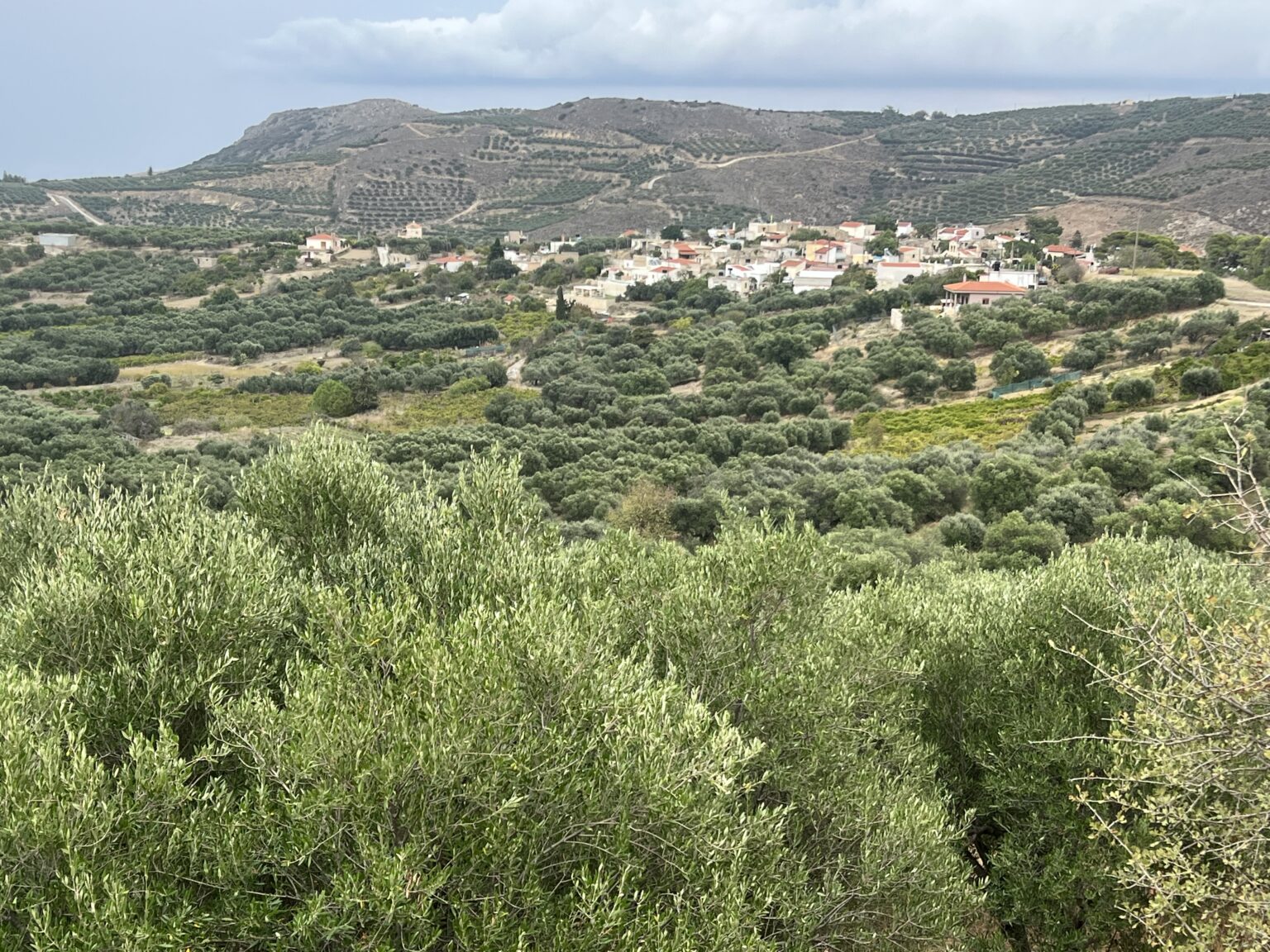
Crete offers the olive almost everything it needs. Summers are long, hot and dry, winters are mild, and the island’s mountains and seas give each valley and hillside its own conditions. The olive is at home in this kind of hard, sunlit landscape, and many Cretan groves are old, terraced and worked much as they have been for generations, with trees spaced widely across stony ground rather than planted in dense, irrigated rows.
The olives themselves are mostly small, native Cretan varieties, which give less oil than larger fruit but oil of greater intensity. Combined with a tradition of pressing the fruit quickly after picking, this is what gives Cretan oil its freshness, its green and fruity aroma and, in many cases, the peppery finish that signals a rich content of natural antioxidants, as explained in High Polyphenol Olive Oil.
Does Cretan Olive Oil Taste the Same Across the Island?
Cretan olive oil does not taste the same across the island. Yiannis Karapiperis, the founder of Olea Legacy, who knows the groves of Crete first hand, explains that the island’s uneven landscape and its many microclimates give the oil a different character from place to place, from the north coast to the south and from the west to the east. Each has its own personality, yet the best of them all share the privilege of being extra virgin, most with an extremely low acidity.
The differences follow the shape of the island. The west, around Chania, is greener and receives more rain, and its groves at Kolymvari, Apokoronas and Selino produce oils that are often rounder and fruitier. The east, towards Sitia in Lasithi, is drier and more exposed, and its oils have long been prized for their balance and delicacy. On the south coast, the warmth of the Libyan Sea and the broad plain of Messara bring the fruit to ripeness earlier, while groves on the mountain slopes of central Crete ripen later and can give sharper, greener oils. Altitude, the angle of a hillside to the sun and the distance from the sea all leave their mark, which is why two groves a short drive apart can produce oils that taste noticeably different.
What Is the Acidity of Cretan Olive Oil?
Acidity measures the free fatty acids in an oil, and it is one of the clearest signs of how well the olives were treated. Under European rules, an extra virgin olive oil must have an acidity of no more than 0.8 per cent. Oil sold under Crete’s protected geographical indication must be extra virgin with an acidity of 0.6 per cent or lower, and many Cretan producers achieve far less.
Low acidity is not something you can taste directly. It reflects sound fruit, careful harvesting and fast pressing, because olives that are bruised or left waiting before the mill begin to break down. In that sense, a low acidity figure is a record of care, and it often goes hand in hand with the freshness and character that make a good oil worth seeking out. Why the earliest olives of the season give the most intense oil is explored in Early Harvest Olive Oil.
Which Cretan Olive Oils Have Protected Status?
Crete holds more protected designations for olive oil than almost anywhere in Greece. Individual areas carry a protected designation of origin, among them Sitia in Lasithi, Messara, Peza and Archanes in Heraklion, and Kolymvari in Chania, each tied to its own landscape and rules of production. In September 2025, Cretan olive oil as a whole was also registered as a protected geographical indication under the name Kriti, covering all four of the island’s regional units, Chania, Rethymno, Heraklion and Lasithi, as reported by Olive Oil Times.
A protected name on the label tells you where an oil comes from and that it meets defined standards. It does not tell you everything, though. Within the same protected area, oil from a careful family producer and oil from an indifferent one can still be very different.
When Is Cretan Olive Oil at Its Best?
Cretan olive oil is at its freshest in the weeks after it is pressed. The harvest on the island usually begins in November and continues through the winter, with lowland and southern groves often picked first and the higher mountain groves last, sometimes as late as February or March, as set out in When Is the Olive Harvest Season in Greece. New oil has a vivid green colour, a grassy aroma and a pronounced bitterness and pepper that soften over the following months. For anyone who would like to see the oil being made, Olive Picking in Greece describes how visitors can join the harvest.
How to Choose a Good Cretan Olive Oil
A good Cretan olive oil tells you about itself. Look for a clear harvest date, a named area or protected designation rather than a vague reference to Greece or the Mediterranean, the words extra virgin, and dark glass or a tin that protects the oil from light. A named producer or estate is usually a good sign, and an acidity figure on the label, while not required, shows a producer confident in its oil. The most common warning signs of poor or misleading oil are set out in How to Spot Fake Olive Oil.
The Oil of a Single Ancient Cretan Tree
Most Cretan olive oil, however fine, is a blend of many trees and often many groves. The rarest oils come from a single ancient tree, where the character of one place and one season is preserved unmixed. Between 25 and 30 November 2026, the AION tree, an ancient olive in eastern Crete, (approximately 2,500 years old) will be harvested and its oil extracted, the story told in How an Ancient Olive Tree in Crete Becomes a Collector Edition. Through Ownership, Olea Legacy offers the stewardship of an ancient olive tree in Greece, with oil from that tree’s own harvest each year. It is Cretan oil, or Greek oil, at its most personal: the taste of one tree, in one place, in one year.