
How an Ancient Olive Tree in Crete Is Becoming a Collector Edition
What follows is an account of how an ancient olive tree collector edition comes into being, from a living tree in eastern Crete to a numbered bottle held by one of twenty.
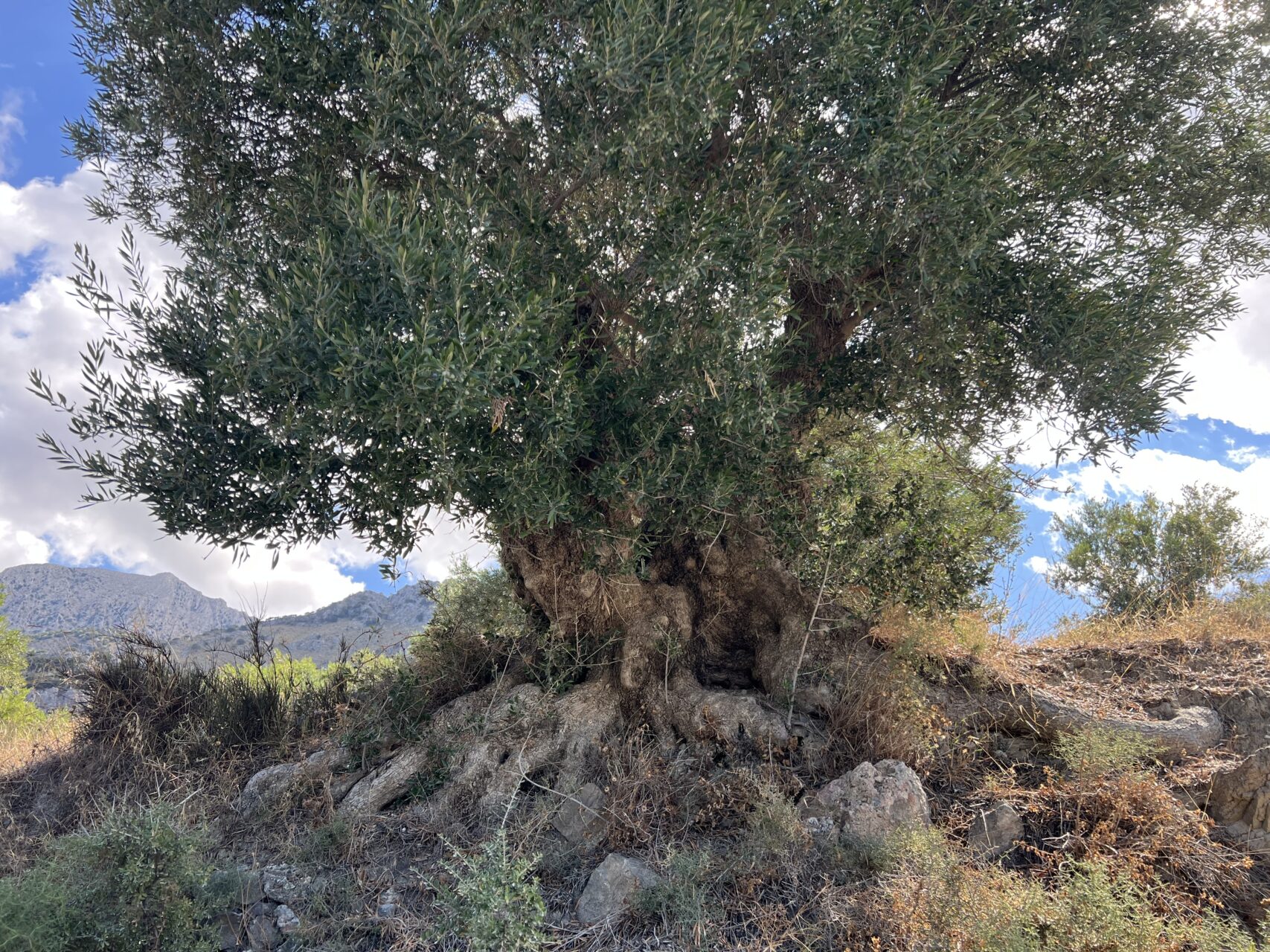
There is a tree in eastern Crete that has been harvested without interruption for longer than most nations have existed. It was old when the Venetians built their first walls along the Cretan coast, old when the Byzantines were still the dominant civilisation of the eastern Mediterranean, old when the concept of the collector as we now understand it had not yet formed in the European mind. Every November, without ceremony, it yields. And for the first time in its recorded life, that yield is being turned into something that can be held, numbered, and kept.
The idea of a collector edition is not new. What is new here is that the thing being collected is not an object someone made. It is a harvest from a living tree. That distinction changes everything about what it means to own one.
What an ancient olive tree collector edition means
The collector edition as a cultural form emerged alongside industrial production. When it became possible to make thousands of identical objects, the object made in small quantities acquired a different status. A first-edition book, a limited pressing of a record, a numbered print, a watchmaker’s annual special release: all of these are defined by the decision to stop. Someone, somewhere, chose the number. They could have chosen differently. The scarcity is real but it is also, in the end, a commercial decision dressed as an artistic one.
The finest expressions of this idea try to ground the limitation in something other than strategy. A single-vineyard wine from an exceptional year is limited not just because the winery decided so, but because that vineyard in that year produced what it produced and no more. The number arises from nature rather than being imposed on it. This is closer to what a harvest from a single ancient tree represents, but even a vineyard can be expanded, replanted, or supplemented from neighbouring plots in a difficult year. A tree that is twenty-five centuries old has no equivalent flexibility.
Why single-tree oil is a different category entirely
Most olive oil, including most excellent olive oil, is blended. This is not a criticism. Blending allows a producer to achieve consistency across harvests, to balance the high-polyphenol intensity of early-picked fruit with the rounder character of later olives, to correct for variation between trees or between sections of a grove. A skilled blender working with good fruit can produce oil of remarkable quality year after year. That consistency is itself a form of craft.
Single-tree oil refuses that consistency. A single tree olive oil limited edition takes that refusal to its logical conclusion. When oil comes from one tree alone, it carries everything that tree experienced in that particular year. The rainfall in March. The temperatures in September. The exact day the fruit reached the point the grower judged right for picking. These variables are not controlled. They are accepted. The resulting oil is the record of a specific biological event, not the product of a production system designed to minimise variation.
For an ancient tree, this specificity acquires an additional dimension. A tree that has been growing in one place for twenty-five centuries has developed a root system that reaches far deeper into the subsoil than any young or middle-aged tree. It draws on mineral reserves and moisture at depths that a newly planted tree cannot access for generations. The flavour complexity that results, the particular character of oil pressed from fruit grown on roots that have been exploring the same ground since before the Ottoman Empire, is not reproducible by any other means. As explored in more detail in the piece on what it means to own something that can never be made again, this kind of scarcity is not a decision. It is a geological fact.
The harvest
Ancient Koroneiki trees in eastern Crete are harvested in November. The timing is not traditional in the sense of being fixed by calendar: it is determined by observation. The grower watches the fruit in the weeks before harvest, assessing colour, texture, and the point at which polyphenol concentration, which peaks before the olive fully ripens, is still high enough to produce oil of exceptional depth and stability. Early harvest oil is more bitter, more peppery, and more complex than oil pressed from fully ripe fruit. It also oxidises more slowly, which means it retains its character longer in the bottle. For a collector edition, this matters.
On the day of harvest, the fruit from this one tree is picked by hand and kept separate from the rest of the grove. It does not wait. Olives begin to oxidise from the moment they are detached from the branch, and the interval between picking and pressing is one of the most consequential variables in oil quality. The fruit goes to the mill within hours.
The pressing
Cold extraction, carried out below twenty-seven degrees Celsius, is the standard for high-quality extra virgin olive oil. At this temperature, the volatile aromatic compounds that give fresh oil its character, the grassy, herbaceous, sometimes floral notes that fade with time and heat, are preserved rather than driven off. The oil that emerges from the centrifuge is filtered and transferred directly to storage.
For this harvest, the oil from the single tree is held in a separate container. It is not blended with the output of the wider grove, not corrected, not adjusted. What came from the tree goes into the bottle.
The vessel and the number
A collector edition communicates its nature through its physical form as much as through its contents. The oil must be protected from the two things that degrade it fastest: light and oxygen. Dark glass, properly sealed, is the practical answer. But the object also needs to say something true about what it contains. A label that simply states the harvest year, the tree, and the edition number is more honest than elaborate packaging. The number on each bottle is assigned at the point of filling, in sequence, so that edition one is the first oil drawn and edition twenty is the last. That sequence is the provenance record. There is no document that makes the oil more authentic than the number itself and the process behind it.
Twenty bottles. Not because twenty is a significant number in any symbolic sense. Because that is what this tree yields in a year.
Between harvests: the stewardship
A collector edition of this kind depends on the health of a living organism across eleven months of the year when no harvest is taking place. Ancient olive trees are extraordinarily resilient, but resilience is not the same as invulnerability. They require considered pruning to maintain canopy structure and fruit production without stressing roots that are already supporting a tree of exceptional age. They require soil management that does not compromise the microbial ecology built up over centuries. They require someone who understands that the goal is not to maximise yield but to sustain a tree that has already outlasted every other thing in the grove by several hundred years.
This stewardship is what makes the following November’s harvest possible. And the one after that. The high-polyphenol profile that makes early harvest Koroneiki oil from ancient trees so distinctive is the product of the tree’s biology, yes, but also of the conditions in which it has been maintained across the full growing year, conditions shaped by the people who work the grove and, increasingly, by those who have chosen to take a formal role in its continued life. The piece on a year in the grove describes in detail what that cycle of care looks like across the twelve months.
What it means to hold edition seven of twenty
The twenty people who will receive an edition of this harvest are not acquiring a product in the conventional sense. They will be receiving the documented output of one year’s life of one tree in one specific place in eastern Crete. The oil will be pressed within hours of harvest. The number will be assigned before the bottle leaves the press room. The harvest year, once past, cannot be revisited. None of the conditions that produced this oil, the weather of that particular November, the state of that particular tree, the exact moment of picking, will occur again in precisely this combination.
What remains is the object, and the connection it carries to a living tree that will still be standing when whoever holds that bottle is long gone. Edition seven of twenty is not a way of saying this Crete collector olive oil is rare. It is a way of saying this oil is this, and only this, and the number tells you exactly where it stands in the twenty things that exist.
Olea Legacy’s AION olive oil collection is the first time this tree’s harvest has been presented as a numbered olive oil edition. For those who wish to be among the twenty, registration is open ahead of the December 2026 release.