Is the Olive Tree the National Tree of Greece?
The olive tree is not the national tree of Greece by law. No Greek statute or decree has ever designated a national tree, and the official symbols of the Greek state are the national flag, the national anthem and the national emblem, which is framed not by olive but by laurel. Yet the olive is universally regarded as the national tree of Greece, and with good reason: it has been bound up with Greek religion, law, sport, diet and family life for thousands of years, and holds its place by tradition rather than by decree.
Is the Olive Tree Officially the National Tree of Greece?
It is not, at least not in any official sense. Lists of national trees often name the olive for Greece, but they do so without citing a law, because there is none to cite. Greece has never passed legislation choosing a national tree, a national flower or a national fruit. What the olive has instead is something no law could give it: a place in Greek life so central that the question of official status rarely arises, and only seems strange when it does.
What Are the Official National Symbols of Greece?
According to the Greek Ministry of Foreign Affairs, the state symbols of Greece are three. The first is the national flag, with its nine blue and white stripes and white cross. The second is the national anthem, the Hymn to Liberty, written by Dionysios Solomos in 1823 and set to music by Nikolaos Mantzaros. The third is the national emblem, a white cross on a blue shield, first provided for by the Constitution of Epidaurus in 1822.
The emblem in use today was set by Law 48/1975, introduced in June 1975, and it is framed by two laurel branches. Laurel, not olive, also appears on the caps of military officers and on the flag of the President of the Republic. In the official symbolism of the modern Greek state, the olive does not appear at all.
Why Is the Olive Seen as the National Tree of Greece?
The olive earned its place long before there was a Greek state to designate anything. In the founding myth of Athens, the city chose the olive offered by Athena over the gift of Poseidon, and the sacred tree on the Acropolis became a symbol of the city itself, a story told in full in The Eternal Tree.
The Athenians protected that inheritance with law. The sacred olives of Attica, known as the moriai, were treated as state property under the care of the Areopagus, inspected every month, and anyone who uprooted one faced exile and the loss of their property. At Olympia, victors were crowned not with gold but with a wreath of wild olive, and when the Olympic Games returned to Athens in 2004, the winners’ wreaths were again woven from olive. The olive branch, meanwhile, became one of the most widely recognised symbols of peace in the world.
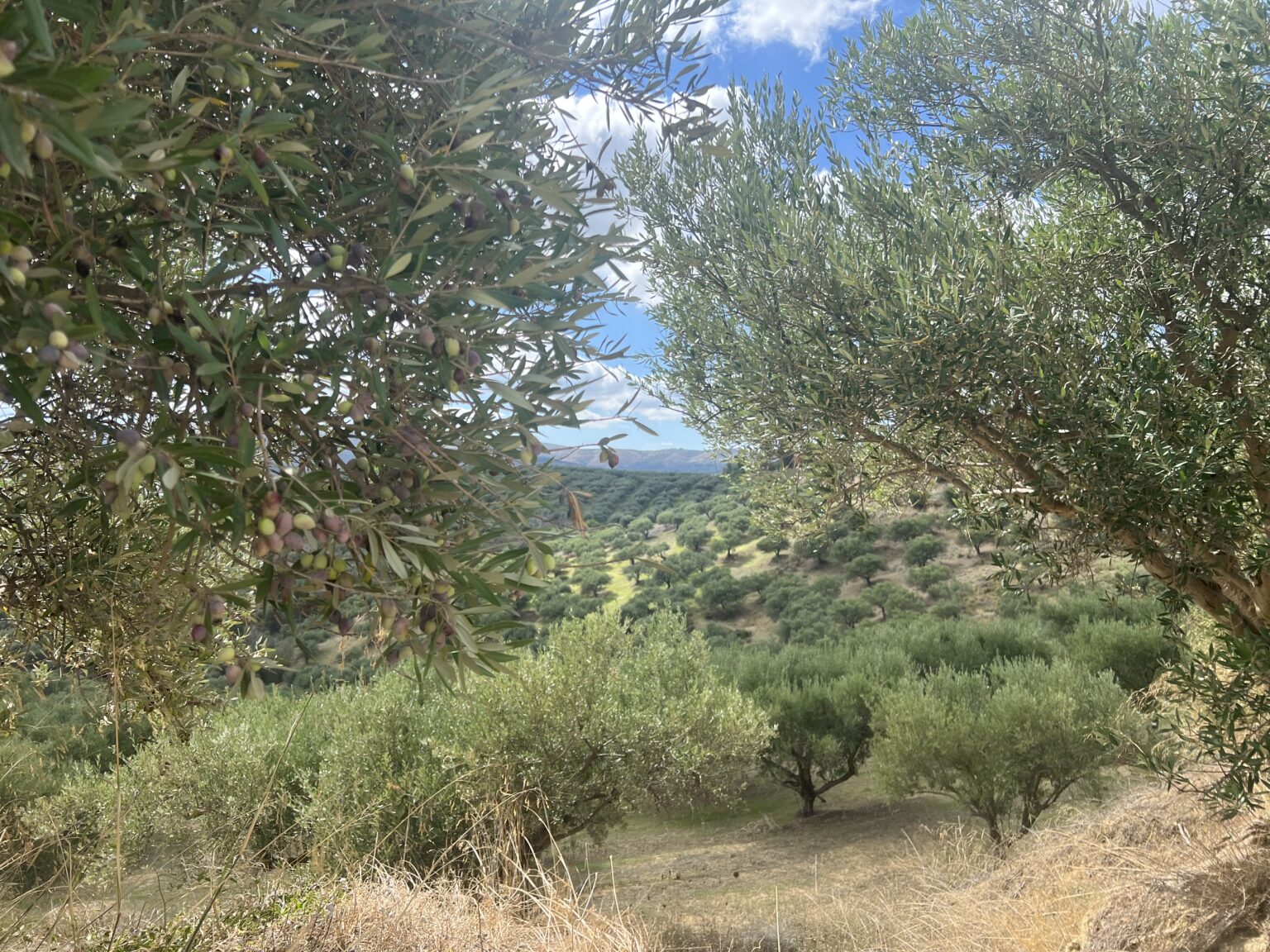
Today, the olive’s importance is written into the land rather than the statute book. Groves cover hillsides from Crete to Halkidiki, a few of the oldest trees are protected individually as monuments of nature, as described in How Greece Protects Its Monumental Olive Trees, and olive oil remains at the heart of the Greek table.
Is the Olive the National Fruit of Greece?
The same answer applies. Greece has no official national fruit, and searches for an official source will not find one. The olive is simply the fruit most closely identified with the country, eaten at almost every meal and pressed into the oil that Greek cooking depends on.
What Does the Olive Tree Mean to Greek Families?
For most Greek families, the olive tree is not a national symbol but part of everyday life. Yiannis Karapiperis, the founder of Olea Legacy, notes from his own experience that most families in Greece keep at least a small olive grove, or a few trees, which they cultivate for the oil they share with family and friends, and that the olive is the everyday hero of family conversation, above all as the harvest approaches.
When the harvest comes, the grove becomes a meeting place. Parents, children, cousins and relatives gather under the trees, and each harvest turns into a small family reunion, repeated every year for as long as anyone can remember. What that day looks like, and how visitors can share in it, is described in Olive Picking in Greece, and the oldest trees that families and travellers can visit are set out in Where to See Ancient Olive Trees in Greece.
A National Tree Without a Law
Perhaps the olive needs no official title. A symbol chosen by a government can be changed by a government, while the olive’s place in Greece has been chosen again by every generation that has planted, tended and harvested it. That is the inheritance at the heart of Olea Legacy, where Ownership offers the stewardship of a specific ancient olive tree in Greece, so that one more family, wherever it lives, can call a Greek olive tree its own.