
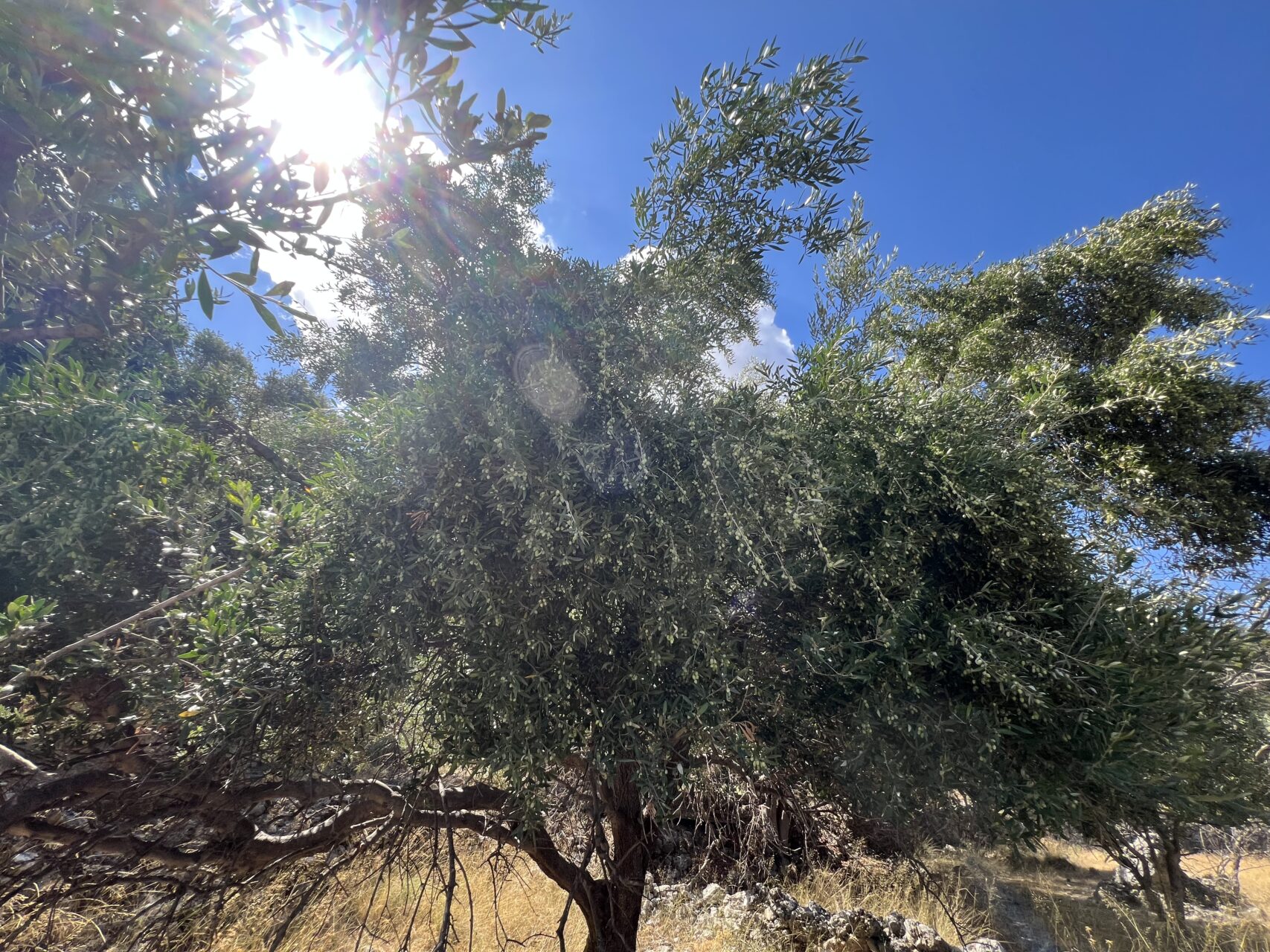
When Is the Olive Harvest Season in Greece
The olive harvest in Greece generally runs from October or November into January. In the north it can begin as early as September, and in parts of Crete and the Ionian islands the last olives are not gathered until February or March. The exact timing depends on three things above all: where the grove is, which variety of olive it grows, and what kind of oil or olive the grower intends to make. Greece’s own tourism authority describes a season running from late September to late January, with most picking in November and December, and that is a fair summary of the country as a whole. Within it, every region keeps a calendar of its own.
Early Harvest and Late Harvest
The first decision that shapes the timing is the oil the grower wants to make. Olives picked early, while they are still green and firm, give a smaller quantity of oil with an intense, grassy and peppery character. This early harvest usually takes place in October and November. Olives left on the tree until they have turned purple or black give more oil, with a softer, rounder flavour. That later harvest fills December and January.
Neither is better in any absolute sense. An early harvest trades volume for intensity, and a later harvest trades intensity for volume and gentleness. Many growers do both, picking part of the grove early and leaving the rest to ripen. What early harvest means for the oil itself is explored in Early Harvest Olive Oil.
The Olive Harvest Region by Region
In Crete, the main harvest begins in November and continues through the winter. Olives for oil are traditionally picked when they are about three quarters ripe, purple or close to black, and in some groves the picking is carried on as late as March. The length of the season reflects the size of the island. A grove on the warm southern coast and a grove high in the mountains may stand only a few hours apart and still be weeks apart in ripeness.
In the Peloponnese, Messinia and the country around Kalamata keep one of the longest harvests in Greece. The regional authority notes that Kalamata’s olives are harvested by hand from November to February, and in practice many growers begin in late October.
The Ionian islands follow a different rhythm. On Corfu, the olive trees planted under Venetian rule have grown so tall that the fruit cannot easily be beaten from the branches. Instead, nets are spread beneath the trees and left in place while the olives fall of their own accord, a collection that begins in October and continues until March.
Lesvos, one of the great olive islands of the Aegean, follows the broad pattern of the country, with its harvest carried through the autumn and winter months. In Halkidiki, in the north, the season starts earliest of all. Green olives for early harvest oil are picked from the middle of September to the end of October, and the remaining fruit can stay on the tree into December.
Olives for the Table and Olives for Oil
Not every olive picked in Greece is destined for the press. Table olives follow their own timetable. Green table olives, such as the large olives of Halkidiki, are picked before they begin to change colour, while black table olives are left to ripen fully. In Halkidiki, the black olives are gathered about two months after the green.
A fresh olive picked straight from the tree cannot be eaten as it is. The fruit contains a bitter compound called oleuropein, and every table olive, green or black, has to be cured in brine, salt or water before it reaches the table. Olives for oil need no such patience. They are pressed as quickly as possible after picking, often on the same day, because the fresher the fruit, the finer the oil.
Weather, Altitude and the Year’s Rain
Two groves of the same variety, in the same region, can be harvested weeks apart. Altitude is the most consistent reason. Higher groves are cooler, their fruit ripens more slowly, and their harvest is often carried into January. Sheltered groves near the sea tend to ripen sooner.
The year itself matters as much as the place. A warm autumn brings the fruit on early, and a cool one holds it back. The rain of the preceding months shapes how the fruit swells and ripens, and rain at harvest time interrupts the work entirely, because wet fruit and wet ground make picking difficult. No two years produce quite the same calendar, which is why a grower asked when the harvest will begin will rarely give a date until the fruit itself has answered.
How the First Day of Picking Is Chosen
In most Greek groves, the start of the harvest is decided not by the calendar but by the fruit. A grower walks the trees in October and November, watching the olives change colour from green to purple to black, and judging when they have reached the balance the family wants. Some taste the fruit. Many simply know, from decades of seasons in the same grove, how the trees behave in a year like this one.
Practical matters then settle the day. The mill must be ready to press, because olives for oil cannot wait long once picked. The weather must be dry. And there must be hands enough, since in many villages the harvest still depends on family, neighbours and seasonal workers who move from region to region as the fruit ripens. The moment the nets are first laid under the trees is the result of all these judgements together. What that day feels like in the grove is described in What an Olive Harvest in Greece Really Feels Like, and where the harvest sits in the tree’s whole year is set out in A Year in the Grove.
Does the Olive Harvest in Greece Go into December and February?
It does, in many places. December is the heart of the later harvest across much of the country, when the fruit has fully ripened and the work is steady rather than rushed. January sees the season close in most regions. February, and in some places March, belongs to the longest harvests: the higher groves of Crete, the hand picking of Messinia, and the nets of Corfu. Anyone hoping to see the harvest late in the winter will still find it, though in fewer groves and at a quieter pace.
When Is the Olive Harvest for an Olea Legacy Tree?
Olive trees in Olea Legacy’s care are harvested within the Greek season each year, at the moment their own growers judge the fruit to be ready, which is why not every owner’s oil is an early harvest oil. Every Olea Legacy tree is tagged and located by GPS, and its olives are picked and pressed apart from the rest of the grove, so each owner receives oil from their own tree alone. This year, the AION tree in eastern Crete, an ancient Mastoidis (Tsounati) olive, will be harvested by 25 November 2026, according to Olea Legacy founder Yiannis Karapiperis.
Owners are welcome to visit their tree during the harvest and to stand in the grove as the nets are laid beneath it. The harvest of the AION tree will become AION, a collection of twenty numbered editions. For those planning a visit to the groves, the Oleotourism guide sets out how to experience the harvest, and the way ownership is structured is explained on the Ownership page.