
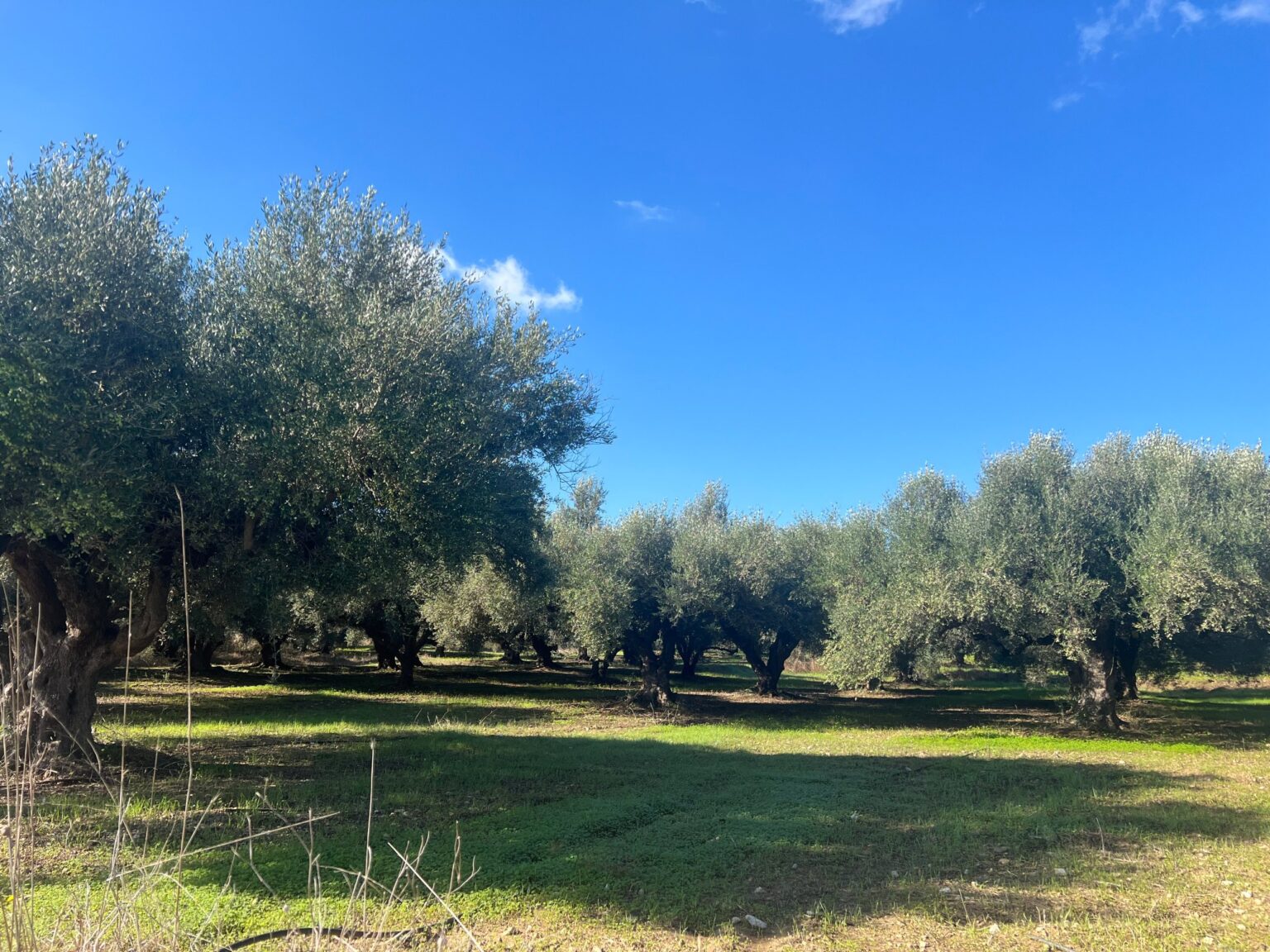
Olive Picking in Greece. How Visitors Can Join the Harvest
Visitors can join olive picking in Greece, and many are welcomed warmly. The harvest runs from October into January, depending on the region, and there are three ways to take part: through a family you know or are introduced to, as a volunteer on a farm stay in exchange for meals and a bed, or on an organised harvest day arranged by a grower or a specialist host. Most visitors who pick olives are not paid, because they come as guests rather than as workers, and in a family grove the day feels far more like a gathering than a job.
Can Visitors Join the Olive Harvest in Greece?
The harvest is one of the few moments in the Greek year when a stranger is genuinely useful. Picking is shared work, and in most villages an extra pair of hands is welcome. The Greek National Tourism Organisation itself invites visitors to take part in the traditional harvest, and there are three usual routes into the grove.
The most rewarding is through people. A friend with family land, a host at a village guesthouse, or a taverna owner whose relatives keep a few hundred trees will often say yes to a visitor who asks, especially one who offers to stay for the whole day. The second route is volunteering through farm stay platforms such as Workaway and Worldpackers, where growers across Crete, the Peloponnese and the Ionian islands list harvest placements. The usual arrangement is a few hours of picking a day in exchange for food and accommodation, which suits travellers with a week or more to spare. The third is an organised harvest experience, a morning or a full day in a grove with a grower, often ending at the mill and the table, which is the easiest choice for a short visit and is covered more broadly in Oleotourism in Greece.
When Is Olive Picking Season in Greece?
Olive picking in Greece generally begins in October and continues into January. Green olives for early harvest oil are picked first, and the main harvest for oil follows through November and December, with Crete and the warmer south often running later into the winter. Each family chooses its own days, according to the ripeness of the fruit and the weather, so it is worth confirming dates close to the trip. The months, region by region, are set out in When Is the Olive Harvest Season in Greece.
What Is Olive Picking in Greece Really Like?
Olive picking in Greece, in a family grove, is closer to a celebration than to a day of farm work. Yiannis Karapiperis, the founder of Olea Legacy, describes it from his own experience of the Greek harvest as a gathering of the whole family, with friends and relatives arriving to help, a great deal of laughter, and lunch under the trees made from what everyone brings: fresh bread, a Greek salad, local cheeses, olives and a little wine.
The day itself starts early. Large nets are spread on the ground beneath each tree, overlapping so that no fruit is lost. The olives are then brought down, by hand, with long sticks, with small rakes drawn through the branches, or with the battery powered shakers that many families now use. Once a tree is finished, the nets are gathered by their corners, the leaves and twigs are picked out, and the olives are poured into sacks or crates before everyone moves on to the next tree. It is steady, physical work, done in conversation, and the rhythm of moving from tree to tree carries the morning.
Rain stops the picking. Wet olives and wet nets are difficult to work with and can spoil the fruit, so a damp morning usually means a day off, and a visitor’s plans should allow for it. For a more personal account of standing in the grove at harvest, What an Olive Harvest in Greece Really Feels Like describes the experience from the founder’s own perspective.
Is Olive Picking in Greece Paid?
Olive picking in Greece is paid work for hired pickers, who are paid by the day at rates agreed locally, and in recent years many growers have struggled to find enough of them, as Olive Oil Times has reported. For visitors, the picture is different. Volunteers on farm stays are not paid, because their work is exchanged for meals and a bed, and guests who join a family for a day are not paid either. Their reward is the lunch, the company and often a bottle of the new oil to take home. Anyone hoping to earn money from the harvest should treat it as a job like any other, and anyone from outside the European Union needs the right to work in Greece before taking paid work.
What to Wear and Bring to the Olive Harvest
Mornings in the grove can be cold, even in the south, and afternoons can turn warm, so layers are the answer. Long sleeves and long trousers protect against branches, sturdy boots or old trainers cope with uneven and sometimes muddy ground, and a pair of gardening gloves makes a long day of handling nets and twigs far more comfortable. A hat, water and sun cream are worth having in October and early November. Most important of all is something to share at lunch, because in a family grove the meal is part of the day, and arriving with bread, fruit or a few pastries from the village bakery is the best way to be welcomed.
How to Be a Good Guest in the Grove
The best guests follow the family’s lead. Every grove has its own way of working, and the people who have picked the same trees for decades know exactly how each one should be approached. Asking before using any machinery, taking care not to step on fruit lying on the nets, and helping to carry the sacks at the end of the day all go a long way. So does staying for lunch rather than slipping away after an hour of picking, because the shared meal is where a visitor stops being a visitor.
From the Grove to the Mill
At the end of the day, or the next morning, the olives are taken to the local mill, where they are washed, crushed and pressed into oil. Most families like to press within a day of picking, because fresh fruit makes better oil. Many growers are happy for a visitor to come along, and tasting oil minutes after it leaves the press is one of the great pleasures of the season. How the olives become oil, step by step, is explained in the olive oil production process, from grove to bottle.
Joining the Harvest of Your Own Tree
For most visitors, olive picking in Greece is a single memorable day. For some, it becomes the beginning of something longer. Through Ownership, an Olea Legacy steward holds an ancient olive tree in Greece and is welcome to join its harvest, to pick from the same branches each year, and to share lunch under its canopy with the family that tends it. Arrangements for a visit are set out on Visit Us in Greece.
The harvest has always belonged to the people who gather for it. There are few better ways to understand Greece than to spend a day among them.