
How Olive Oil Is Made.
Traditional vs Modern Extraction Methods
The journey from crushing olives to bottling the finished oil is far more complex than most people realise, and the extraction method chosen at the mill determines the polyphenol content, the sensory profile, the oxidative stability, and ultimately the health benefit of what ends up in the bottle. Understanding the difference between traditional stone milling and cold pressing on one hand, and modern centrifugation based cold extraction on the other, explains why Greek extra virgin olive oil produced with precision technology today often outperforms oil made using older, more romanticised methods.
From Harvest to the Point of Extraction
The journey begins with harvest and transport, and the method chosen, hand picking or mechanical shaking, together with the speed of the journey to the mill, is the first variable that genuinely matters. Olives begin to oxidise and ferment the moment they leave the tree, so producers aiming for high polyphenol, early harvest oil need fruit at the mill within hours, ideally under six, to preserve volatile aromatic compounds and phenolic content. Green olives harvested early carry higher levels of oleocanthal, hydroxytyrosol, and oleuropein aglycon, the compounds responsible for the peppery sensation and the strongest health benefit, while fully ripe, late harvest olives carry less of both.
Once at the mill, the olives are washed to remove leaves, soil, and debris, and sorted to remove unripe, overripe, or damaged fruit that would otherwise introduce off flavours. This is where crushing begins, and where the two main technologies genuinely diverge. Traditional stone mills, cylindrical stones turning slowly over a granite base, crush gently, producing larger oil droplets and releasing less chlorophyll, though they work more slowly. Modern hammer mills and metal crushers use stainless steel to reduce olives to a fine paste rapidly, processing faster but generating more heat through friction if not carefully controlled. For any method aiming to preserve polyphenols, the paste must stay below twenty seven degrees Celsius during crushing, the threshold that separates genuinely cold processing from anything warmer.
After crushing, the paste undergoes malaxation, a slow mixing that helps microscopic oil droplets merge into larger ones and improves how cleanly the oil separates later. This typically runs for fifteen to forty five minutes and must also stay below twenty seven degrees, since longer malaxation increases yield but reduces both aroma complexity and phenolic content, a trade off that quality focused producers resolve firmly in favour of quality. It is at the next stage, separating the oil from the solids, that traditional and modern methods diverge most dramatically, in a way that shapes the final oil’s composition more than almost anything else in the process.
Traditional Pressing, the Historical Method
For centuries, oil was extracted through mechanical pressure alone. Malaxed paste was spread onto fibre mats or woven esparto discs, stacked, and pressed using lever systems weighted with stone, screw based presses, or, from the 1830s onward, hydraulic presses. The pressure forced oil and vegetation water through the fibre layers, which were then left to settle and separate naturally by density.
The appeal of this method is real. The equipment is simple and affordable for small producers, the language of cold pressed and first press resonates with buyers seeking something they perceive as more natural, and when executed correctly at genuinely low temperatures, traditional pressing does retain a meaningful share of polyphenols. But the disadvantages are equally real. Long contact between paste and air during pressing invites oxidation, and imperfect hygiene can introduce rancidity. Where malaxation runs past forty five minutes or temperature control slips, research shows traditional pressing can lose twenty to forty per cent of polyphenol content compared with modern extraction. Hydraulic pressing also cannot extract all the available oil, which historically led producers to add hot water for a second press, a practice that degrades quality further. Processing is slower and strictly batch based, and fibre mats and esparto discs are genuinely difficult to clean between batches, carrying a real risk of residual moisture and microbial contamination.
It is worth noting, since the point is often misunderstood, that research into Cretan oils produced by traditional stone milling and cold pressing without centrifugation found roughly sixty per cent higher polyphenol content than many commercial Spanish, Italian, and Greek extra virgin oils. That result came down to cultivar and early harvest timing rather than the pressing method itself. Once harvest stage and variety are held constant, modern centrifugation preserves polyphenols better than traditional pressing does.
Modern Cold Extraction, Centrifugation and Better Control
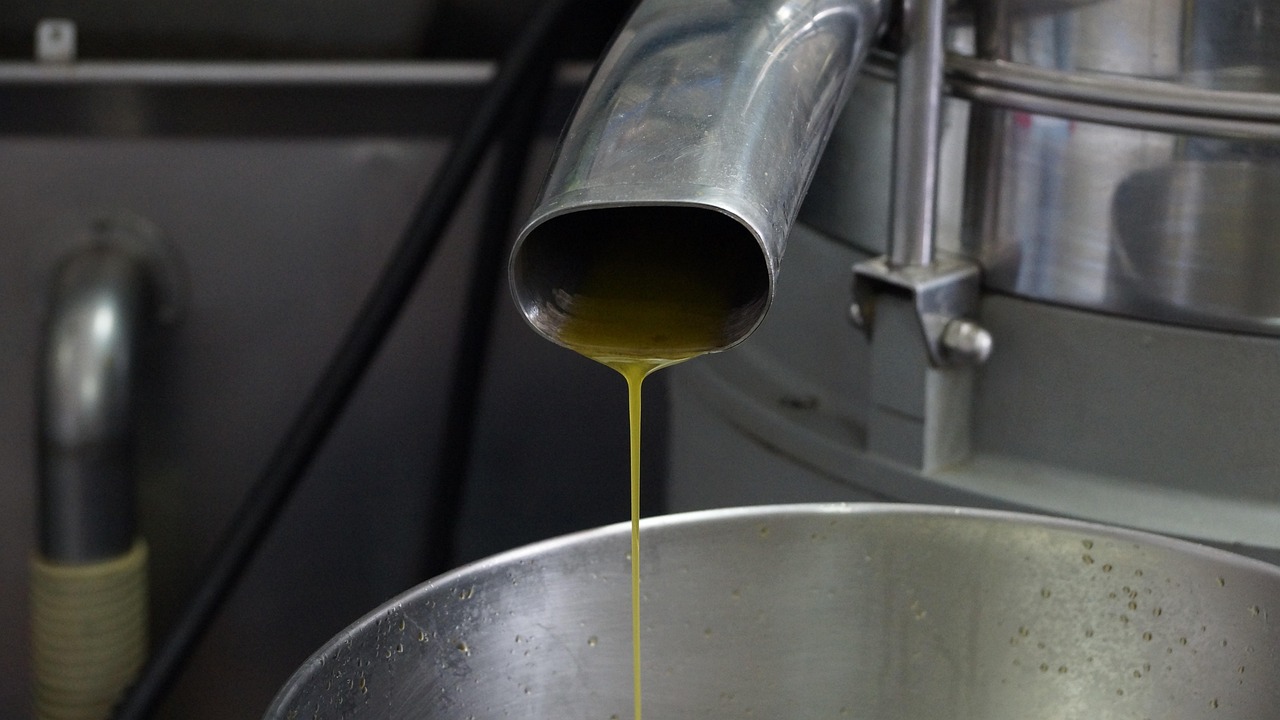
Modern mills use continuous centrifugation, and the sequence, while more technical, is worth understanding since it explains the quality gap. Olives are crushed rapidly into a fine paste with the temperature actively controlled below twenty seven degrees, using water cooling where needed. The paste is malaxed gently for fifteen to forty five minutes at the same controlled temperature. It then enters a horizontal decanter centrifuge, which spins at high speed and separates oil, vegetation water, and solid pomace by density in a matter of seconds rather than hours, dramatically reducing air exposure. The resulting oil and water mixture passes into a vertical centrifuge to remove any remaining water and fine solids, and an optional fine filtration stage can improve clarity and stability without meaningfully affecting polyphenol content.
Within this, there is a further distinction worth knowing. Older three phase decanters added warm water to the paste to aid separation, but that water diluted polyphenols into the aqueous phase, reducing phenolic content in the finished oil by fifteen to twenty five per cent. Two phase decanters, now the standard for quality focused mills, eliminate that water addition entirely, and studies confirm they preserve significantly more phenolic compound as a result.
The case for modern centrifugation rests on several genuine advantages taken together. Rapid, sealed processing minimises oxidation and air contact, and consistent temperature control throughout prevents heat damage to volatile aromatic compounds. Stainless steel equipment is easily sanitised between batches, reducing contamination risk in a way fibre mats never could. Centrifugal force extracts more oil than pressing, and continuous processing allows for far more consistent quality batch to batch. Shorter malaxation and reduced air exposure preserve the delicate green fruit, herbaceous, and peppery notes that define premium early harvest oil, and active cooling keeps paste reliably below twenty seven degrees even in a hot climate, where traditional pressing can genuinely struggle without proper infrastructure.
A comprehensive peer reviewed study on Cretan extra virgin oils compared traditional stone mill pressing directly against modern centrifugation, both using early harvest olives, and the conclusion was clear. Traditional methods only outperformed when paired with an excellent cultivar, very early harvest timing, and organic, stress free farming. When harvest stage and variety were held equal, centrifuged oils equalled or exceeded the traditionally pressed oils in polyphenol retention.
Why This Matters for Early Harvest and High Polyphenol Oil
Both traditional and modern methods can technically be called cold, meaning malaxation and extraction stay below twenty seven degrees, but modern centrifugation offers far better control over that threshold. Traditional pressing in a hot summer climate can struggle to hold the paste below twenty seven degrees without proper cooling infrastructure, while modern centrifuges can actively chill the paste in real time regardless of ambient heat, protecting the oleocanthal and other secoiridoid compounds responsible for the peppery throat catch and much of the anti-inflammatory benefit.
Speed matters just as much. Early harvest olives carry volatile aromatic compounds, geranium, grass, green leaf, herbaceous notes, that oxidise quickly on contact with air. Traditional pressing can take two to four hours from malaxation to full oil separation, with the paste exposed to air throughout, while modern centrifugation separates the oil within minutes, sharply reducing oxidative loss. For Greek extra virgin oil, where complexity and a peppery bite are genuinely prized, that speed is an advantage rather than a shortcut. Different phenolic compounds respond differently too.
Secoiridoids such as oleocanthal and oleacein are heat and oxygen sensitive and need rapid, cool extraction to survive intact. Simple phenols such as hydroxytyrosol and tyrosol are somewhat more stable but still benefit from minimal air exposure, while lignans are the most stable of all and change little regardless of method. Rapid centrifugal extraction, particularly paired with two phase, no added water technology, preserves the more fragile secoiridoids better than traditional pressing precisely because it minimises the time available for oxidation to do its work.
The Truth Behind First Cold Pressed
The phrase first cold pressed appears on a great many bottles, carrying an implication of ancient tradition and purity that no longer holds up to scrutiny. The distinction between first and second press dates from the era of hydraulic pressing, when hot water was added to the pomace for a second, lower quality extraction. Modern mills simply do not do this any more, which makes the term a historical artefact rather than a meaningful description.
It is sometimes used to imply superiority over modern extraction, even though centrifugation is now the scientifically stronger method, and there is no regulatory definition of first cold pressed under European, International Olive Council, or American standards, which means it carries no enforceable meaning at all. A traditionally pressed oil from late harvest, fully ripe olives can legitimately carry the phrase while delivering meaningfully lower polyphenol content than a centrifuged early harvest oil. For anyone choosing between bottles, the harvest date, the early harvest designation where stated, any lab tested polyphenol figure, and the producer’s own reputation are worth far more attention than the extraction terminology on the front label.
How Extraction Connects to Everything Else
Understanding extraction ties directly into the broader picture of what makes an oil genuinely premium. High polyphenol oil depends on modern centrifugal extraction paired with early harvest fruit and two phase separation, since rapid, sealed processing minimises oxidation of fragile compounds like oleocanthal and oleacein. High Polyphenol Olive Oil explores this in full. Early harvest character depends on the same rapid, cool processing to preserve the volatile aromatics and phenolic complexity that give premium Greek extra virgin its peppery, herbaceous finish, and Early Harvest Olive Oil covers this side in depth.
The best Greek mills increasingly pair state of the art centrifugation with traditional cultivars such as Koroneiki, combining heritage variety with precision processing, the genuine best of both worlds rather than a trade off between them. Understanding extraction also explains why proper storage afterwards matters so much, since oil extracted carefully at low temperature still needs protecting to preserve its polyphenol profile, a subject covered fully in How to Store Olive Oil. And because authentic extra virgin oil must be mechanically extracted and processed cold, understanding the extraction process itself is one of the clearest ways to recognise when an oil has been mislabelled, a theme explored further in How to Spot Fake Olive Oil.
Frequently Asked Questions
Is traditional cold pressing better than modern centrifugation?
Both can produce excellent oil when done well, but modern centrifugation offers stronger control, better hygiene, and more reliable polyphenol retention. Traditional pressing carries genuine romantic appeal but depends heavily on operator skill and climate to hold temperature correctly, whereas modern mills are simply more consistent.
Does cold pressed guarantee high polyphenol content?
No. Cold pressed only confirms that temperature stayed below twenty seven degrees during processing, which matters but is far from the only factor. Harvest timing, olive variety, and growing conditions matter just as much, and a traditionally pressed oil from late harvest, ripe olives will still carry lower polyphenols than a centrifuged early harvest oil.
What was the first press, if modern mills no longer do a second one?
The term comes from the era of hydraulic pressing, when hot water was added to the pomace for a second, inferior extraction. Modern mills have abandoned that practice entirely, which makes the distinction meaningless today beyond its use in marketing.
Why does centrifugation produce a higher yield than pressing?
Centrifugal force separates oil from water and solids more efficiently than gravity and manual pressure ever could. Hydraulic presses cannot extract all the available oil, while centrifuges recover considerably more, which is exactly why centrifugation became the industry standard.
Does faster extraction harm the oil’s quality?
No, the opposite is true. Rapid extraction protects quality by minimising air exposure and oxidation. It is the slower, traditional pressing process that carries the greater risk of oxidative loss in the volatile compounds that give premium oil its character.
Can traditional mills still produce genuinely high polyphenol, early harvest oil?
Yes, but it demands exceptional climate control and real operator expertise to hold temperature and timing correctly throughout. Modern mills make this considerably easier and more consistent, thanks to active cooling and sealed processing.
What is a two phase versus a three phase centrifuge?
Three phase decanters add warm water during separation, which dilutes polyphenols into the water and reduces phenolic content in the finished oil by fifteen to twenty five per cent. Two phase decanters remove that water addition step entirely, preserving significantly more of the oil’s phenolic compound, which is why they are now the preferred choice among quality focused producers.
Where Science and Heritage Meet
The extraction method chosen at the mill is one of the most consequential decisions in the entire life of a bottle of olive oil, and one almost entirely hidden from view by the time it reaches a table. Traditional stone milling and cold pressing carry real historical prestige and can produce excellent oil when executed with genuine precision, but modern centrifugal cold extraction is, on the evidence, the stronger method for controlling temperature, minimising oxidation, preserving polyphenols, and delivering consistency batch after batch.
The idea that older methods are automatically better has not held up under peer reviewed scrutiny, even though the romance of tradition persists in how oil is marketed.
The oil worth seeking out combines both sides of this properly, traditional Greek cultivars such as Koroneiki, harvested early for maximum phenolic richness, processed in a modern mill with precise temperature control and two phase centrifugation. That combination, heritage variety and contemporary precision together, is what produces oil with authentic flavour, genuine health benefit, and the complexity that defines something worth calling truly premium.
