
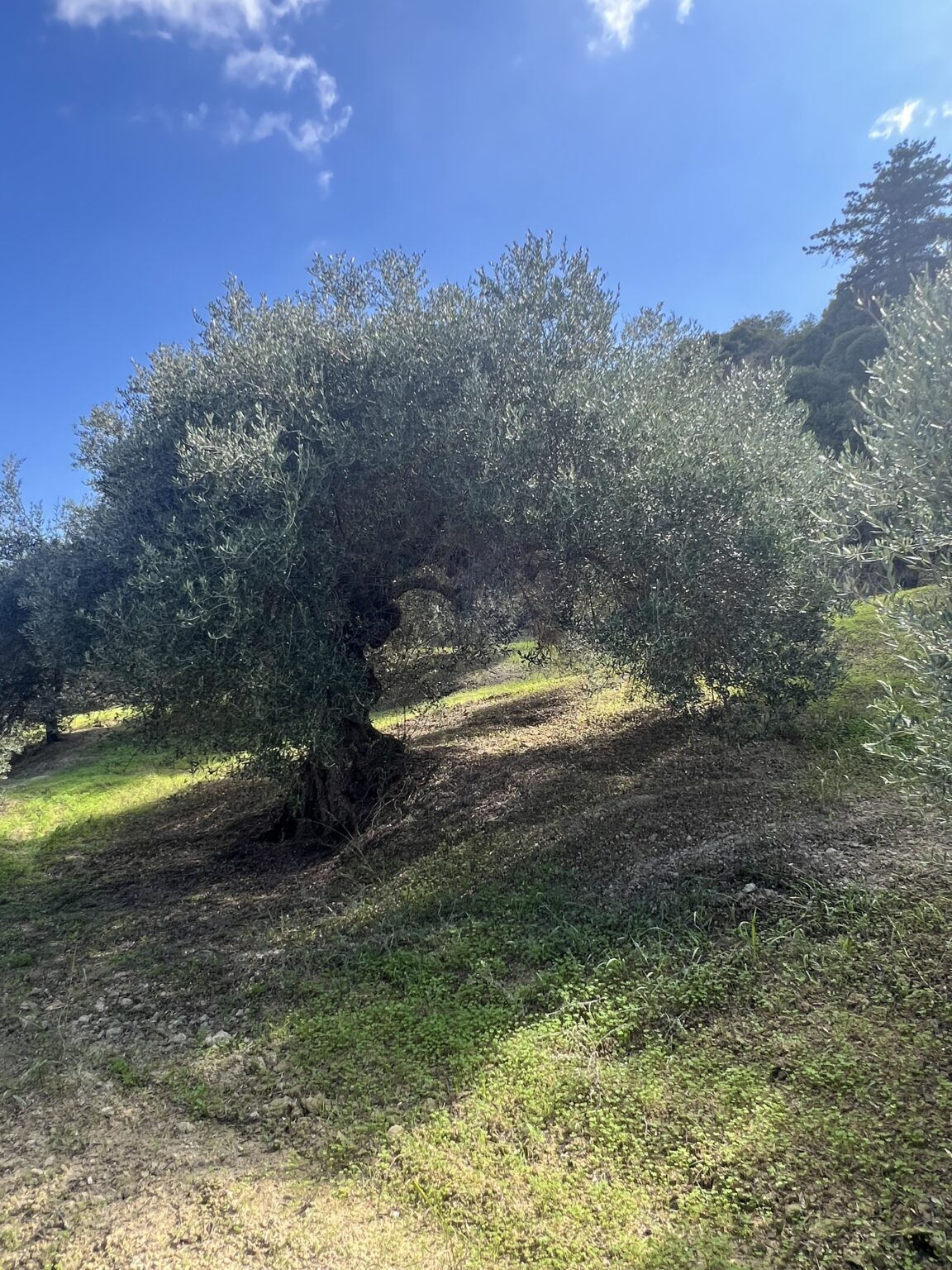
Gifting an Olive Tree. What It Means as a Gift
Giving an olive tree means offering something that will outlast the moment it marks. Across the Mediterranean, the olive has stood for peace, endurance, abundance and wisdom for thousands of years, and a tree given as a gift carries all of those meanings at once. It says that the giver wishes the recipient a life that is steady, generous and long, and it says so with something that is itself alive and still growing. That is what sets an olive tree apart from almost any other gift: the meaning does not end when the gift is opened.
What the Olive Tree Has Always Meant
The olive’s place in Greek life gave it a vocabulary long before anyone thought of it as a present. Its branch was carried by those who came in peace or in need. The Greeks called such a branch a hiketeria, and a supplicant held one when approaching a temple or a powerful household, as a sign that they came with good intentions. The goddess of peace was shown with an olive branch in her hand, and brides wore wreaths of olive leaves.
These meanings have travelled far beyond Greece, but they have not changed. Peace, goodwill, fruitfulness and continuity are still what an olive tree says, whether it is planted in a courtyard or given across a table. The story of how the olive became Greece’s most enduring emblem, from Athena’s gift to the city that took her name, is told in The Eternal Tree.
What an Olive Tree Means as a Wedding Gift
In the Odyssey, the marriage bed of Odysseus and Penelope is not simply a piece of furniture. Odysseus built it himself around the trunk of a living olive tree that grew inside the walls of his home, and raised the bedroom around it. When Penelope tests the stranger who claims to be her husband, she asks for the bed to be moved. Only the real Odysseus knows that it cannot be, because it is rooted in the earth.
No image in Greek literature describes a marriage more exactly. A union built around something alive and immovable is a union that stays where it was made. To give an olive tree at a wedding is to offer the couple that image: a shared life with roots, which cannot simply be carried off and set down elsewhere. The olive wreaths once worn by Greek brides carried the same wish, for a marriage that would bear fruit and endure.
What It Means at a Birth or Christening
A tree given at the start of a life carries a particular kind of hope. The child will not understand the gift for many years, and that is part of its meaning. An olive tree given at a birth or a christening is an investment in a future the giver may not see, and a quiet statement that the child belongs to something larger and older than any single family. Why parents and grandparents have long chosen trees for exactly this purpose is explored in Why Parents Plant Trees.
What an Olive Tree Means as a Sympathy Gift
An olive tree given in memory of someone is not a gift of celebration but of consolation, and the olive is unusually suited to it. Few trees are as hard to destroy. When an olive is burned, frozen or cut to the ground, it will often send up new shoots from the base of its trunk and grow again from the same roots. An ancient olive may have done so many times over the centuries.
Given in sympathy, the tree says something that words often cannot: that what was rooted remains, and that a life can continue to bear fruit beyond its own span. A tree dedicated to someone who has died becomes a living place of memory, one that changes with the seasons and grows older instead of fading.
What It Means Between Partners in Business
When the gift marks a partnership, an agreement or the end of a long negotiation, the olive returns to its oldest meaning: the branch held out in goodwill. An olive tree offered between partners says that the relationship is meant to last, and that both sides intend to tend it. It is a gesture of trust that asks nothing in return, which is why it carries more weight than an object chosen to impress. Gifting at this level is considered more broadly in Gifts That Last Beyond a Lifetime.
Why a Living Tree Means More Than a Potted Olive or a Cut Branch
A cut olive branch is a beautiful symbol, but it is a symbol of something that has already ended. It will dry and fade within days. A young olive in a pot is alive, but its future depends on the climate it has been sent to and on the care its new owner can give it, and many potted olives do not survive a northern winter.
An ancient olive tree growing in its own soil in Greece is a different kind of gift. It stays where it has always stood, tended by growers who know it, and it goes on doing what it has done for centuries: flowering in spring, setting fruit in summer and giving a harvest each autumn. The meaning of the gift is renewed every year, because the tree itself is renewed every year. That is the difference between a gift that represents endurance and a gift that is endurance.
What Does It Mean When Someone Gives You an Olive Tree?
When someone gives you an olive tree through Olea Legacy, it means that a specific ancient tree in Greece has been placed in your name for as long as the stewardship continues. According to Olea Legacy, the recipient receives an online stewardship certificate, carrying the tree’s history, area, photographs and films, within 48 hours, followed by the same materials in a luxury box by courier about fifteen days later, and a handwritten olive wood plaque is placed on the tree itself.
From then on, the recipient follows the tree through the year in seasonal photographs and films, receives oil from its harvest, and holds an open invitation to visit it in Greece. The giver may choose the tree from photographs of those available or leave the choice to the recipient. How the gift is arranged is explained in The Gift That Grows, and the Gift an Olive Tree in Greece page sets out how to begin. For the wider idea of a gift that becomes a living legacy, the Living Legacy Guide provides the full account.