
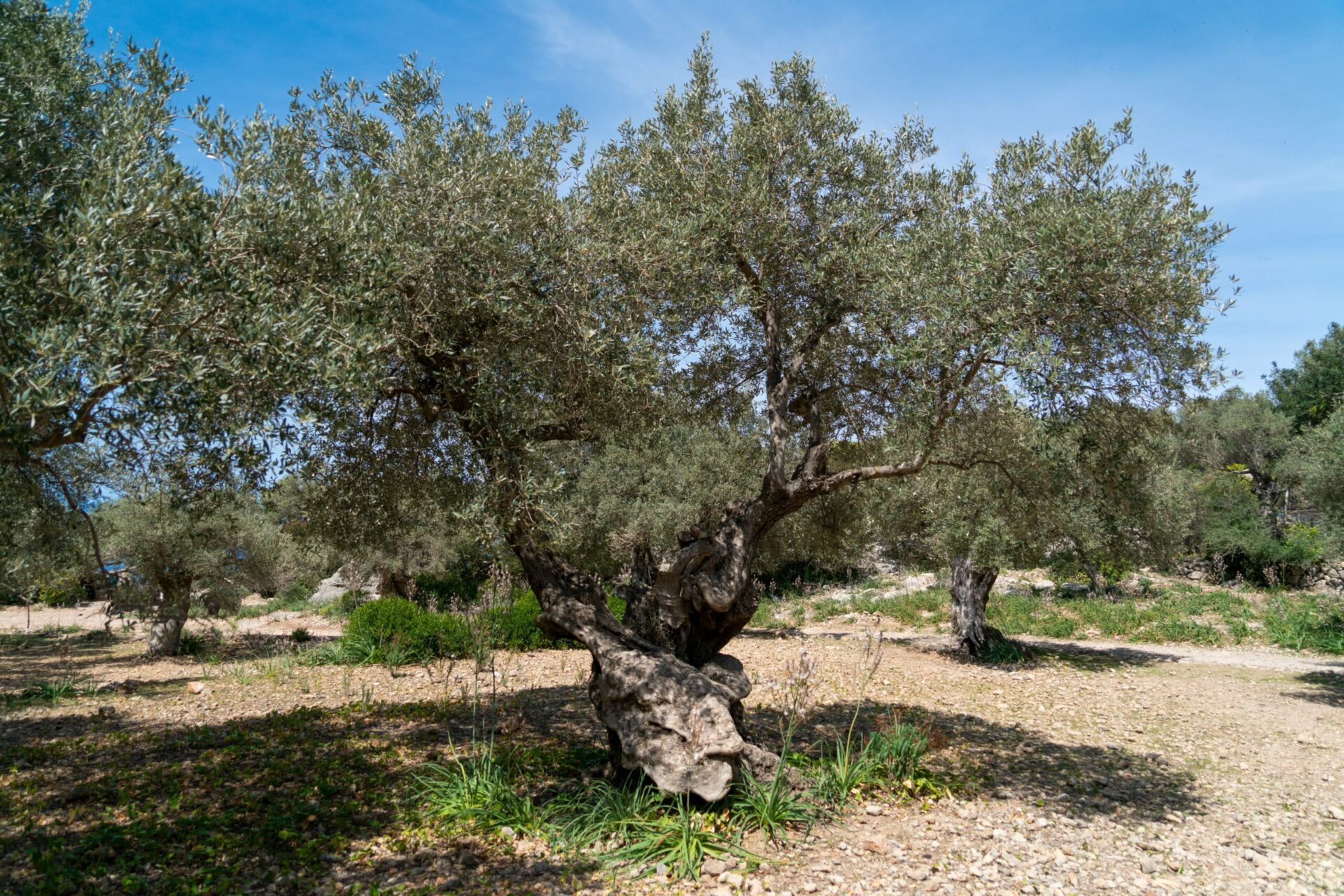
The Olive Growing Regions of Greece.
A Guide to Provenance
Greece is not a single olive-growing region. It is a collection of distinct landscapes, each with its own soil, climate, altitude, and centuries of cultivated tradition, producing oil that varies meaningfully from one region to the next. Understanding this matters because provenance is not a marketing term. It is the single most important factor in what ends up in the bottle.
At Olea Legacy, the trees in our registry are stewarded across several of Greece’s most historic olive-growing regions, each chosen for what it specifically contributes to the character of the oil it produces. This is a guide to that geography, and to why it matters.
Why growing region matters more than most buyers realise
Olive oil is, in many respects, closer to wine than to a standard commodity product. The variety of olive matters, but so does where it grows. Altitude affects the rate at which olives ripen. Proximity to the sea affects humidity and the salinity of the soil. Rainfall patterns affect the size and oil content of the fruit. The age of the trees affects the complexity and depth of flavour. None of these factors can be replicated by processing technique alone.
This is why two olive oils made from the same variety, even using identical extraction methods, can taste entirely different depending on where the trees grew. Genuine provenance is not a story added after the fact. It is the foundation the entire flavour profile is built on.
For a broader understanding of how extraction and processing affect quality once the olives leave the grove, How Olive Oil Is Made provides the technical detail.
Crete
Crete is home to some of the oldest continuously cultivated olive groves in the Mediterranean. The island’s terrain ranges from coastal plains to mountain terraces, and its olive cultivation has been documented since Minoan times, making it one of the longest unbroken olive-growing traditions in the world.
Cretan oil is typically characterised by a robust, peppery profile with pronounced bitterness in its early harvest form, reflecting both the local Koroneiki variety that dominates the island and the intensity of the Cretan sun. The island’s traditional Mediterranean diet, long associated with longevity research, is built substantially around the quality and volume of olive oil consumed daily.
The Peloponnese
The Peloponnese is one of Greece’s most significant olive-growing regions, with a particular concentration of ancient trees in its southern and western areas. The peninsula’s varied terrain, from coastal lowlands to inland hill country, produces oil with notable diversity even within the region itself.
Trees here often number among the oldest in our registry, some having been in continuous cultivation for centuries. The oil tends to combine the fruitiness associated with Koroneiki with a smoother, more rounded character than the more intense profiles found further south, making it particularly well suited to the kind of nuanced tasting experience that defines premium single estate oil.
Halkidiki
Halkidiki, in northern Greece, offers a distinct profile shaped by its cooler climate and the proximity of its three peninsulas to the Aegean. Olive cultivation here has long existed alongside the region’s other notable agricultural traditions, and the oil produced tends to carry a milder, more delicate character than the more intense southern regions.
This makes Halkidiki oil particularly prized for dishes and palates that favour a gentler olive presence, while still carrying the genuine complexity that distinguishes Greek extra virgin oil from mass-produced alternatives.
The Aegean Islands
The scattered geography of the Aegean Islands produces some of the most distinctive micro-terroirs in Greek olive cultivation. Wind exposure, mineral-rich volcanic soil on islands such as those in the Cyclades, and the particular intensity of Aegean sunlight all contribute to oils with pronounced character and often higher polyphenol concentrations, a quality explored in detail in High Polyphenol Olive Oil.
Trees on these islands have often adapted over generations to challenging growing conditions, producing smaller yields but oil of considerable depth and intensity.
The Ionian Islands
On the western side of Greece, facing Italy across the Ionian Sea, this island chain benefits from a milder, wetter climate than much of the rest of the country. The resulting oil tends to carry a softer, more delicately balanced profile, reflecting both the climate and the slightly different cultivation traditions that have developed in relative geographic isolation from mainland Greece.
The Ionian Islands’ olive heritage is closely tied to Venetian influence during centuries of rule, which shaped both agricultural practice and the broader culinary culture of the region in ways still visible today.
Why Olea Legacy stewards trees across multiple regions
A single region, however excellent, tells only one story. By stewarding trees across Crete, the Peloponnese, Halkidiki, the Aegean Islands, and the Ionian Islands, Olea Legacy is able to offer genuine diversity of provenance, allowing each client’s tree and harvest to reflect a specific, traceable place rather than a generic national designation.
This also means that when a client receives oil from their tree, what they are tasting is not simply Greek olive oil. It is the expression of a specific landscape, a specific microclimate, and in many cases, trees that have stood in that landscape for longer than recorded memory extends.
For the full story of how these regional differences translate into the cultivation and ownership experience, Greek Olive Tree Ownership and The Olive Tree Guide provide further depth. For those planning to visit and experience these regions directly during harvest season, Oleotourism in Greece offers a complete seasonal guide.
Provenance as the foundation of everything Olea Legacy does
Every tree in the Olea Legacy registry is tied to a specific, documented location. This is the basis upon which the entire experience is built, the flavour in the bottle, the story behind the ownership, and the connection to a particular piece of Greek land that no generic olive oil brand can offer.
To explore which regions are currently available for stewardship, visit the Ownership page, or begin a conversation through the Contact page.