What Is Experiential Ownership?
The Shift from Having to Belonging
There is a word that has been missing from the luxury conversation for a long time. Not a new word, an old one, used differently. A word that describes something that is neither pure possession nor pure experience, but something that contains both and exceeds them.
The word is belonging.
Not belonging in the sense of legal title or formal ownership. Belonging in the sense of genuine, mutual relationship. The sense in which a person belongs to a place, a tradition, a living thing, in the same way and with the same depth as that place, tradition, or living thing belongs to them.
Experiential ownership is the concept that describes this relationship. It is what happens when the act of holding something is simultaneously an act of experiencing it, not once, at the moment of acquisition, but continuously, across seasons, across years, and across the generations that follow.
Why the Existing Categories Are No Longer Sufficient
The luxury world has long organised itself around two concepts: ownership and experience. You own things like property, art, objects of quality and beauty. You have experiences like travel, hospitality, access, encounter. The two categories have been understood as essentially distinct: ownership is permanent and static, experience is temporary and dynamic.
This distinction served its purpose for most of the twentieth century. But the most sophisticated consumers and the research that follows them are now confirming something that the two-category framework cannot quite accommodate. The things that matter most, the holdings and encounters that people return to across years, that deepen rather than diminish, that they speak about to their children, are neither purely owned nor purely experienced. They are both, simultaneously and inseparably.
At J.P. Morgan Private Bank, advisers are seeing families integrate experiences and lifestyle assets directly into long-term planning, with experiences playing a critical role in how families think about succession and cohesion. Luxury London
This observation is more radical than it first appears. It means that the boundary between what a family owns and what a family experiences is dissolving at the highest level. The most valuable holdings are increasingly those that cannot be placed clearly on one side of that boundary or the other, because they exist in the space between.
Experiential ownership is the name for what exists in that space. And for those who have arrived at the heart of what this relationship actually involves, there is a more precise term that better captures the quality of responsibility, continuity, and mutual belonging that defines it at its deepest level.
Defining Experiential Ownership, and Its More Precise Name
Experiential ownership is the condition of holding something in such a way that the act of holding it is itself a continuous, deepening experience. It is not simply owning something that can be experienced. It is a mode of relationship with a living thing in which ownership and experience are inseparable, in which you cannot fully possess the thing without experiencing it, and cannot fully experience it without the specific quality of relationship that custodianship creates.
The most accurate name for this relationship is not experiential ownership but experiential stewardship, because what the holder acquires is not simply a thing but a responsibility, a relationship, and a place in a continuing story. Ownership implies possession and control. Stewardship implies belonging, care, and the acceptance of an obligation that extends beyond the individual and beyond the present moment.
Experiential stewardship is therefore the more honest and more complete description of what this concept involves. It is what happens when the act of stewarding something, of taking genuine responsibility for a living thing of cultural, historical, and ecological significance, is itself the experience. Not a product that has been curated and delivered. Not a moment that concludes when the itinerary ends. A living relationship that continues, deepens, and produces something new from itself each season, for as long as it is held and tended.
The distinction between experiential ownership and experiential stewardship is examined in detail in The Difference Between Ownership and Stewardship, and it is the foundation on which this concept rests.
The Characteristics of Experiential Stewardship
Not everything can be held in this way. Experiential stewardship has specific characteristics that distinguish it from conventional possession, from pure experience, and from symbolic custodianship.
It is continuous rather than episodic
Conventional experience is episodic. It happens in defined moments and then concludes. A journey ends when the plane lands. A private dinner concludes when the last guest leaves. The memory remains, but the experience itself is finished. Experiential stewardship is continuous. It does not have a conclusion. The living thing being stewarded continues to grow, produce, and change regardless of whether the holder is actively engaging with it. The experience of holding it accumulates across seasons rather than concluding at a defined endpoint.
It requires something of the steward
Pure possession requires nothing beyond the act of acquisition. You buy the thing, you own it, you experience the satisfaction of possessing it. Experiential stewardship requires ongoing engagement, attention, care, relationship, and eventually the willingness to pass the thing forward in better condition than it was received. This requirement is not a burden. It is the source of the deeper satisfaction that experiential stewardship provides. The steward is not passive. They are a participant in an ongoing relationship with something alive.
It belongs to more than one person simultaneously
Experiential stewardship is never entirely individual. The thing being held belongs, in different senses and at different levels, to the steward, to the people who tend and maintain it, to the landscape and culture it is embedded in, and to the future stewards who will receive it when the current holder passes it forward. This shared belonging is what gives experiential stewardship its specific quality of depth, the sense of being part of something larger than personal accumulation, of holding a thread in a continuing story rather than simply possessing an object.
It produces something new each year
The most complete forms of experiential stewardship involve living things that generate new experience from themselves each season. Not the same experience repeated, but something genuinely new, the product of that specific year’s conditions, that specific season’s character, that specific tree’s response to its environment. Euromonitor’s research confirms that consumers want hyper-curated experiences that resonate with their values and passions, leaving them with positive, lasting memories and deeper brand engagement. In this new experiential economy, emotional connection is a form of brand equity. Euromonitor. The living thing that generates new emotional connection each year is the highest form of that equity, and in the case of an ancient olive tree in Greece, it is held by the individual steward rather than by any brand.
How Experiential Stewardship Differs from the Experience Economy
The experience economy, the shift from buying things to buying moments, is now well documented and extensively analysed. Bain and Altagamma’s annual Luxury Goods Worldwide Market Study identified a persistent and crucial trend among consumers globally, favouring experiential indulgence over conspicuous consumption as the new symbol of status, pivoting toward wellness, connection, and self-reward, calling it a tectonic shift toward luxury experiences such as hospitality, cruises, and fine dining, and away from traditional luxury goods. Style Rave
But experiential stewardship is not the same as the experience economy. The experience economy sells experiences as a category of product, a cruise, a retreat, a private dining event. These experiences are designed, delivered, and concluded. They are excellent, and they are meaningful, but they belong to the supplier as much as the consumer. The consumer purchases access. The experience itself is the supplier’s creation.
Experiential stewardship is the reverse. The thing being experienced is held in the steward’s name. It is not designed or delivered by a supplier. It grows independently, in a real place, from its own biological agency. The steward’s experience of it is not a product that has been curated and sold. It is the natural result of a genuine relationship with a living thing that is doing its own work in the world.
LGT Wealth Management observed that luxury spending is no longer only about ownership but the ability to display access. LGT Wealth Management. Experiential stewardship goes further than either. It is not about displaying access, and it is not about conventional ownership. It is about belonging to a place, a tradition, a living thing, in a way that is entirely private, entirely personal, and entirely real.
Why This Shift Is Happening Now
The emergence of experiential stewardship as a conscious practice is not arbitrary. It corresponds to a specific convergence of forces that the research is documenting with increasing clarity.
Ultra-wealthy women are reshaping demand toward more experiential, purpose-driven, and highly personalised offerings, prioritising meaning, craftsmanship, and brand alignment over status alone. Altrata. The broader UHNW population is asking, with increasing urgency and seriousness, what their holdings are actually doing for them, for their families, for the world they exist within. The answers that satisfy this question are not financial instruments or curated journeys. They are living relationships with real things in real places that produce genuine value across multiple dimensions simultaneously.
The research on slow luxury and intentional living confirms the same direction. Today, the most sophisticated individuals are redefining luxury around lived experience, emotional balance, and quality of life rather than visible accumulation or even extraordinary encounter. The quiet revolution in what counts as valuable is pointing, consistently and from multiple directions, toward exactly what experiential stewardship describes a continuous, productive, deepening relationship with something alive.
The Ancient Olive Trees in Greece as Experiential Stewardship in Its Purest Form
Of all the things currently available for experiential stewardship, the ancient Greek olive tree is the most complete expression of the concept available anywhere in the world.
It is held as a specific, documented, named stewardship. The holder’s name is on the certificate, on the plaque in the grove, on the label of the oil. The legal and personal relationship is entirely real.
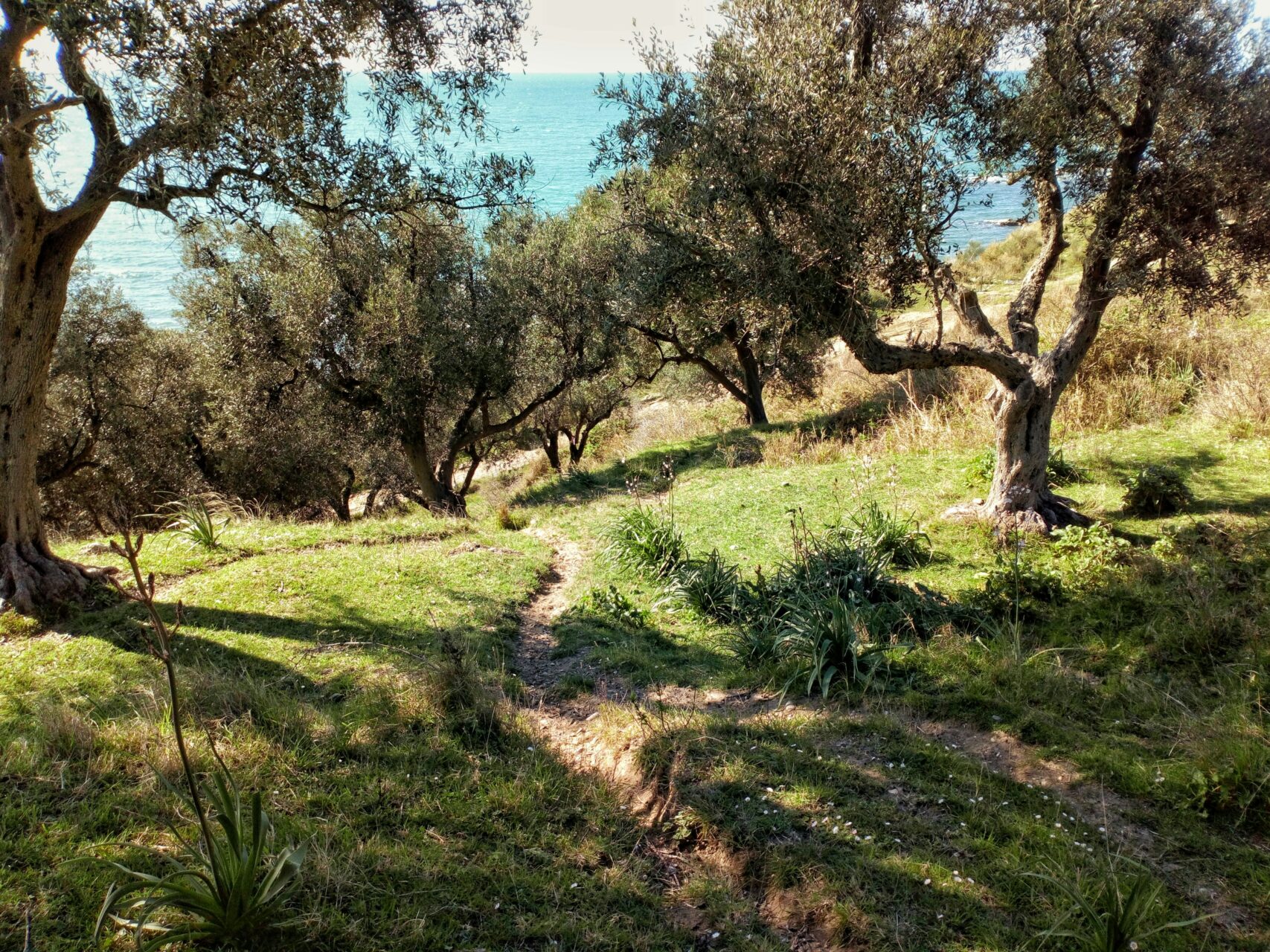
And it is experienced continuously, across seasons, across years, across the generations that follow. Each autumn, the olive tree produces olives that are harvested and pressed into extra-virgin olive oil that arrives at the steward’s table as the direct result of that specific tree’s life in that specific year. Each spring, the tree flowers. Each summer, it sets fruit. Each visit to the grove is a different encounter from the last, the tree is larger, the relationship deeper, the accumulated story richer.
The steward does not simply hold the tree. They belong to it, to the grove, to the landscape, to the tradition of cultivation that has sustained these trees for centuries. And the tree, in every sense that matters, is theirs to care for.
That is experiential stewardship. And it is what the luxury world has been moving toward, without yet having the language for it, for the better part of a decade.
For the foundational account of what a living legacy is and why it matters now, the Living Legacy Guide provides the comprehensive framework. For the concept of heritage ownership, the conscious practice of holding something of cultural significance as a custodian, What Is Heritage Ownership? examines the related concept in depth. For those exploring the broader shift of luxury away from possession toward living relationship, Why Luxury Is Moving Beyond Possession provides the macro cultural context.
What Belonging Actually Feels Like
Experiential stewardship is not an abstract concept. It has a specific quality of feeling that distinguishes it from both pure possession and pure experience.
It feels like return rather than arrival. When the olive oil arrives each autumn, the steward is not encountering something new for the first time. They are returning to something familiar that has nevertheless changed, and that carries the character of the new season alongside the accumulated memory of every previous one. It is the feeling of coming back to a place you know well and finding it slightly different, in ways that deepen rather than disturb your relationship with it.
It feels like responsibility rather than entitlement. The steward of an ancient olive tree in Greece does not feel simply that they possess something rare. They feel, if they are paying attention, that they are responsible for something that existed before them and will exist after them. That responsibility is not heavy. It is the particular lightness of knowing that what you are doing today will still matter when you are no longer here to see it.
And it feels like belonging, the specific sense of being part of something larger than yourself, of holding a thread in a continuing story, of occupying a place in a landscape and a tradition that extends in both directions beyond the horizon of a single life.
That is what experiential stewardship offers. And it is what neither a possession nor an experience, taken alone, can provide.
To explore what experiential stewardship of an ancient Greek olive tree involves in practice, the Ownership page provides the full account of how stewardship is structured at Olea Legacy. To begin a private conversation, reach the Contact page as your starting point.