
The Ultimate Olive Oil Tasting Guide.
Discover Quality, Taste, and Heritage in Every Sip
Learning to read what an oil is telling you
Most people meet olive oil as a background ingredient, poured without much thought before it disappears into a dish. Tasting it properly asks for the opposite of that habit. It asks you to stop, to give the oil your full attention for a minute or two, and to treat it as something worth understanding on its own terms rather than something that simply accompanies other food. This is not a formal ritual reserved for professionals. It is a way of paying attention, and once learned, it changes how you choose, use and think about the oil on your table.
An oil reveals itself through three qualities, and once you can recognise them, very little about a bottle remains hidden from you.
Fruitiness, and what it tells you about the harvest
Fruitiness is the aroma of the olive itself, captured at the moment of pressing. It is not sweetness, and it rarely resembles the fruit you would eat from a bowl. An oil pressed from olives picked early, while still green, tends to carry grassy, herbaceous notes, sometimes edging toward tomato leaf or artichoke. An oil from a later harvest, when the fruit has ripened and softened, tends toward gentler, rounder notes, closer to almond or ripe stone fruit. The full case for why that early picking matters so much is set out in early harvest olive oil.
Neither register is superior to the other. They simply describe different moments in the growing season, and a producer’s decision about when to pick shapes everything that follows. What matters, when you smell an oil, is that this aroma is present and alive. Its absence is usually the first sign that something has gone wrong somewhere between the grove and the glass.
Bitterness, and why it is not a flaw
Bitterness carries an unfortunate reputation among people who have not tasted much genuine extra virgin oil, largely because decades of mild, heavily processed oils trained expectations in the wrong direction. In truth, bitterness is evidence of polyphenols, the compounds an olive produces naturally to protect itself, and it is one of the clearest markers of a fresh, well made oil. You feel it toward the back of the tongue, a light catch rather than an unpleasant sharpness, and it tends to be most pronounced in oils from early harvest fruit, where polyphenol levels are at their highest. The science behind why that matters for health as well as flavour is covered separately in high polyphenol olive oil.
An oil claiming to be extra virgin yet showing no bitterness at all is worth a second look. It may simply be a very late harvest oil, which is a legitimate style, or it may have lost its character to age or poor handling.
Pungency, and the sensation in the throat
The last of the three is pungency, the faint peppery catch felt in the throat a moment or two after swallowing. It comes from a compound called oleocanthal, and its presence is, once again, a sign of a fresh, polyphenol rich oil rather than a defect. The finest oils hold fruitiness, bitterness and pungency in balance with one another, so that no single quality dominates the others and the overall impression feels complete rather than lopsided.
The moment of tasting
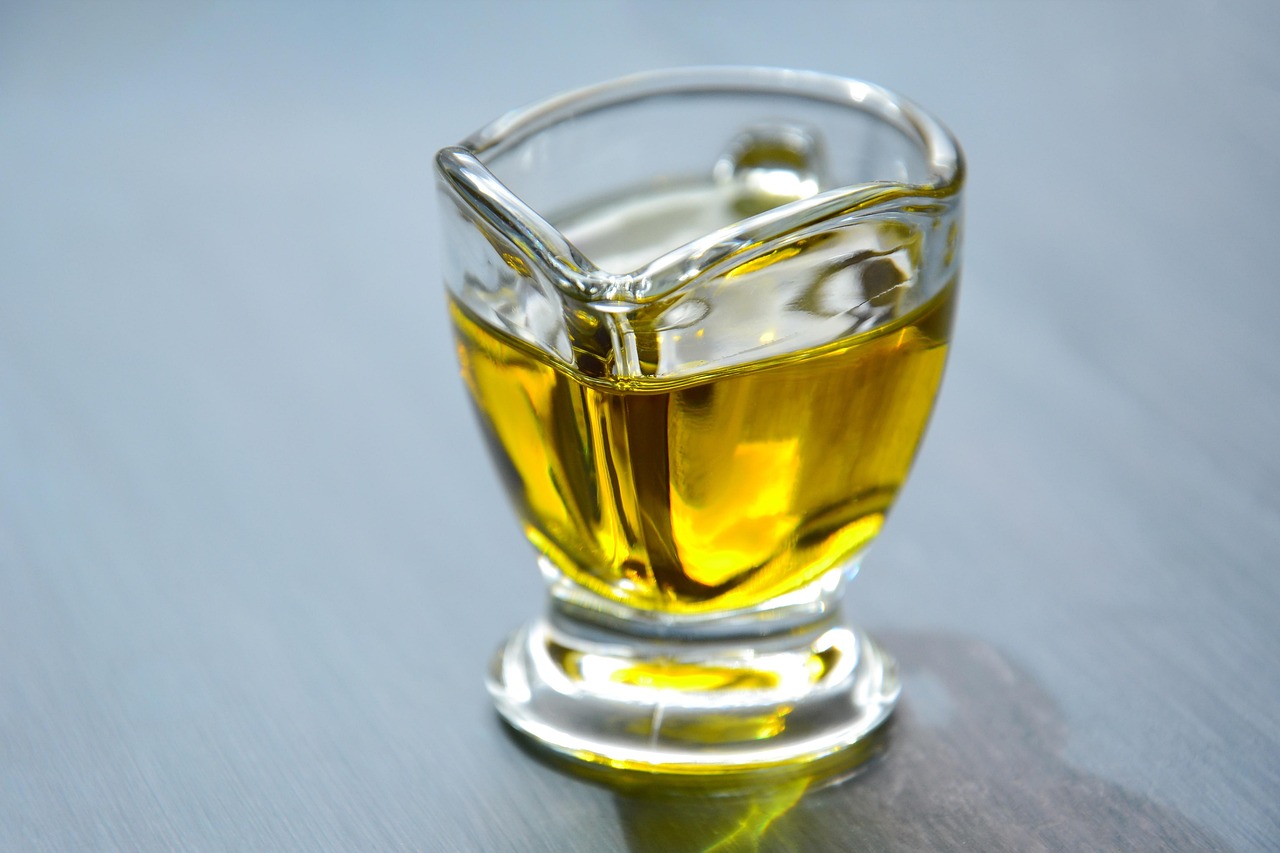
To taste properly, warm a small amount of oil in a glass held between your palms for around half a minute, which releases its aroma more fully than cold oil ever will. Smell it slowly, more than once, since a second and third pass often reveals notes the first missed entirely. Then take a small sip, let it move across your palate, and notice where the bitterness sits and how the pungency arrives after swallowing. A finish that lingers for a little while, rather than vanishing at once, generally points to genuine quality and freshness.
Any hint of rancidity, mustiness or a flat, waxy character has no place in a genuine extra virgin oil, whatever the label may claim, and learning to recognise these off notes is as valuable as learning to appreciate the good ones. For the fuller picture of how quality is classified and verified, olive oil grades explained sets out the distinctions in detail.
Terroir, and why the same tasting reveals different stories
Two oils built from the same variety and the same broad harvest window can still taste distinct from one another, because the land beneath the trees, the age of the trees themselves, and the particular weather of a given year all leave their mark on the fruit. This is why tasting rewards patience over time far more than a single sitting ever could. An oil tasted across several years from the same source begins to tell you something about place, not just about technique, and that is where tasting stops being a skill and becomes closer to reading a landscape.
This is precisely the experience that stewarding an ancient Greek olive tree through Olea Legacy offers. The oil that reaches you each year comes from a specific, named tree in a historic grove, and tasting it season after season becomes a quiet record of that tree’s own life, its harvest, its weather, its particular corner of Greece. For those who wish to understand more about how that stewardship works, the Greek olive tree ownership page sets out the detail.