
Greek Olive Varieties
Why olive variety matters as much as origin
Two oils can come from the same corner of Greece, harvested in the same week, and still taste entirely different, because the variety of olive behind each one carries its own inherited character, as distinct in its way as one grape is from another in wine. Understanding the varieties that define Greek oil is understanding a large part of what makes it worth seeking out in the first place.
Koroneiki, the variety behind most Greek oil
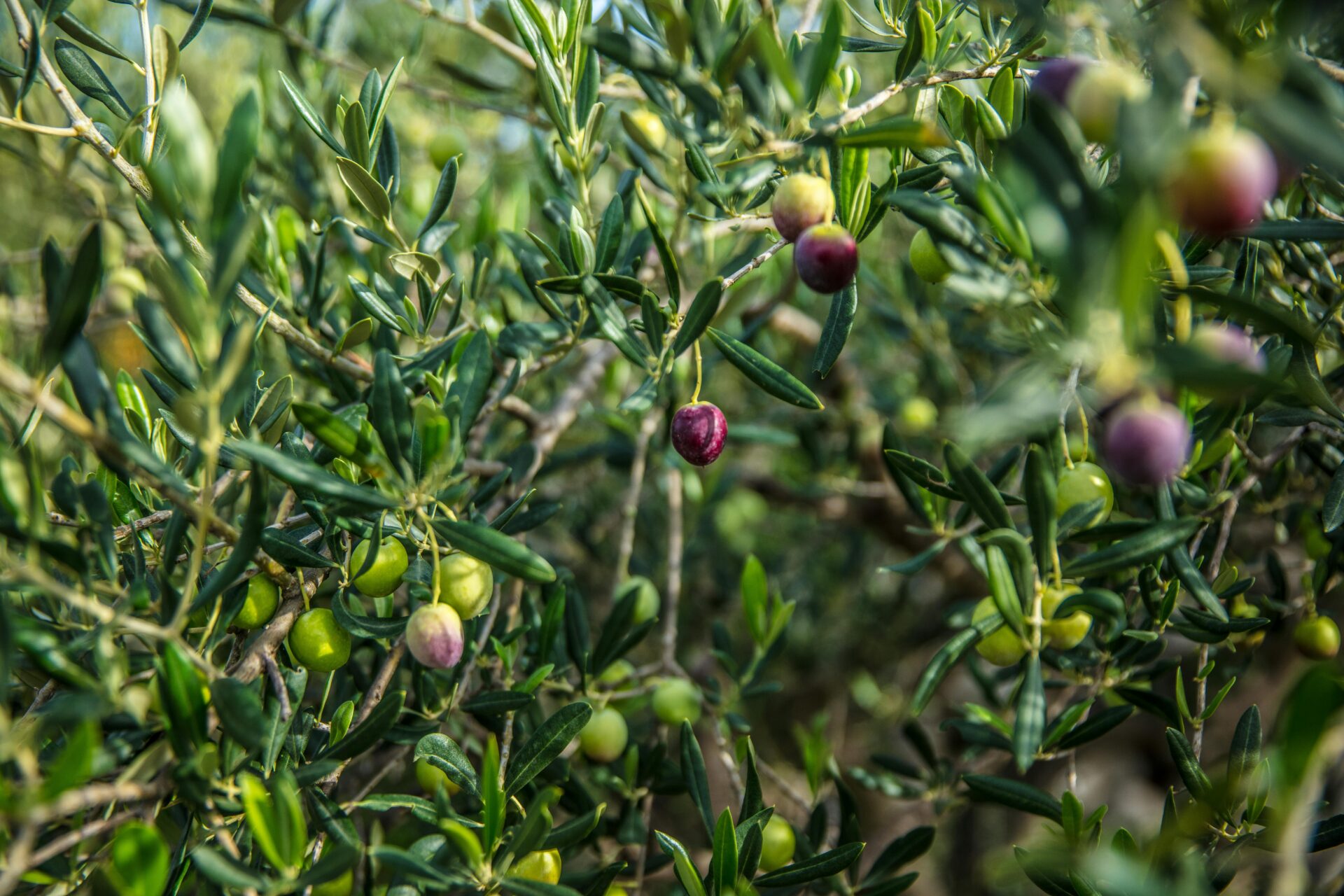
Koroneiki accounts for roughly sixty per cent of everything Greece produces, grown widely across the Peloponnese, Crete and the Ionian islands, and it is the variety most closely associated with Greek extra virgin oil at its finest. The olives themselves are small and demanding, needing close to five kilograms of fruit for a single kilogram of oil, yet that inefficiency is repaid many times over in what the oil delivers. Fresh cut grass, green almond and wild herb lead the aroma, followed by a palate built on real bitterness and a peppery finish that can run from gentle to pronounced depending on when the fruit was picked. It is also, not incidentally, the variety Olea Legacy stewards, chosen for exactly this combination of character, resilience and centuries of cultivation behind it.
Manaki, a quieter Peloponnesian heritage
Manaki, sometimes known as Kothreiki, has been cultivated without interruption in the Argolis region of the eastern Peloponnese, around Corinth, Argos, Mycenae and Epidaurus, for more than four thousand years. The tree copes well with cold and strong wind, and its oil carries notably low acidity alongside genuinely high phenolic content, with a flavour that leans sweeter and more delicate than the assertive character of Koroneiki, a quieter expression of the same tradition rather than a lesser one.
Kalamata and the lesser known regional varieties
Kalamata is better known internationally as a table olive than as an oil, yet fruit grown in Messenia specifically for oil production, harvested early rather than left to cure, yields something genuinely intense, fruity and pungent, occasionally reaching polyphenol levels among the highest recorded anywhere. Beyond these three, Ladoelia, whose name translates simply as oil olive, grows across the Peloponnese, Crete and the Ionian islands, while Kolovi from the Aegean islands, Lianolia Kerkyras from Corfu, and Adramitini from Lesvos each carry the particular character of their own small region, a reminder of how much diversity sits within Greek production alone, long before any comparison with oil from elsewhere.
How terroir shapes what variety begins
Variety sets the genetic potential, but terroir decides how much of it actually reaches the bottle. Soil composition alone makes a real difference, clay tending toward deep, earthy oil, sandy ground toward something lighter and fruitier, limestone toward a brighter, cleaner finish, while rocky, mountainous terrain forces roots down hard in search of water, a stress that concentrates flavour and lifts polyphenol content as the tree defends itself. A Koroneiki grown high in the Peloponnesian mountains and a Koroneiki grown in a Cretan valley can taste noticeably different for exactly this reason, which is why olive growing regions of Greece is worth reading alongside this piece for the fuller regional picture.
Single origin, and what it actually protects
Single origin oil, traced to one specific grove or region rather than blended across several, carries the clearest expression of both variety and terroir, and it is generally the stronger choice from a health perspective too, since its polyphenol content tends to track closely with the specific cultivar and place it came from. Blending has its own honest place in everyday cooking oil, but it trades that distinctiveness for consistency, which is a different goal entirely. Stewarding a named tree, as Olea Legacy owners do, sits at the furthest point along this same idea, oil that belongs to one tree, in one grove, rather than to any blend at all.
From variety to what reaches your table
Understanding the variety behind an oil changes how you taste it, turning what might otherwise be an anonymous bottle into something legible, a specific tree, a specific place, and a specific decision about when to harvest. For the practical method of tasting that difference properly, the olive oil tasting guide sets out how, and for the fuller story of Koroneiki’s place within Greek heritage more broadly, the olive tree guide continues where this leaves off.