What Makes Greek Heritage Unique.
Why It Matters to the World's Most Thoughtful People
Every ancient civilisation left something behind. Egypt left monuments of extraordinary scale and permanence, the pyramids, the temples, the hieroglyphic record of a civilisation that endured for three thousand years. Rome left law, language, and the physical infrastructure of an empire whose roads and aqueducts are still visible across three continents. Mesopotamia left the earliest written records of human thought. The Indus Valley left a level of urban planning that would not be matched in Europe for two millennia.
These are genuine and significant legacies. But they share a characteristic that is rarely examined directly.
They are finished.
The civilisations that produced them no longer exist in any continuous sense. Their languages are dead or transformed beyond recognition. Their religious practices are historical artefacts. Their agricultural traditions have been replaced, their landscapes remade, their living connection to the present severed by the weight of the centuries between.
Greek heritage is different. And the difference is not one of degree but of kind.
The One Heritage That Never Stopped
Greek heritage is the only major ancient civilisation’s heritage that has never stopped. Not been revived, not been reconstructed, not been reimagined for a contemporary audience, but continued, without interruption, from antiquity to the present.
The Greek language has the longest continuous written tradition of any language in the world — written records stretching back over 3,700 years, from the Linear B inscriptions of the Mycenaean civilisation to the text messages and social media posts of 2026. As the language with the longest written tradition, Greek holds a unique place in the history of languages and continues to influence modern culture, science, philosophy, and art; a living testament to civilisation’s enduring quest for knowledge and expression. GreekReporter
The Orthodox Christian tradition, which absorbed and preserved enormous quantities of ancient Greek philosophy, ritual, and cultural practice, has been continuously practised in Greece for seventeen centuries. The philosophical categories of Plato and Aristotle did not merely influence subsequent Western thought; they became the conceptual framework within which that thought was conducted, and they remain so today.
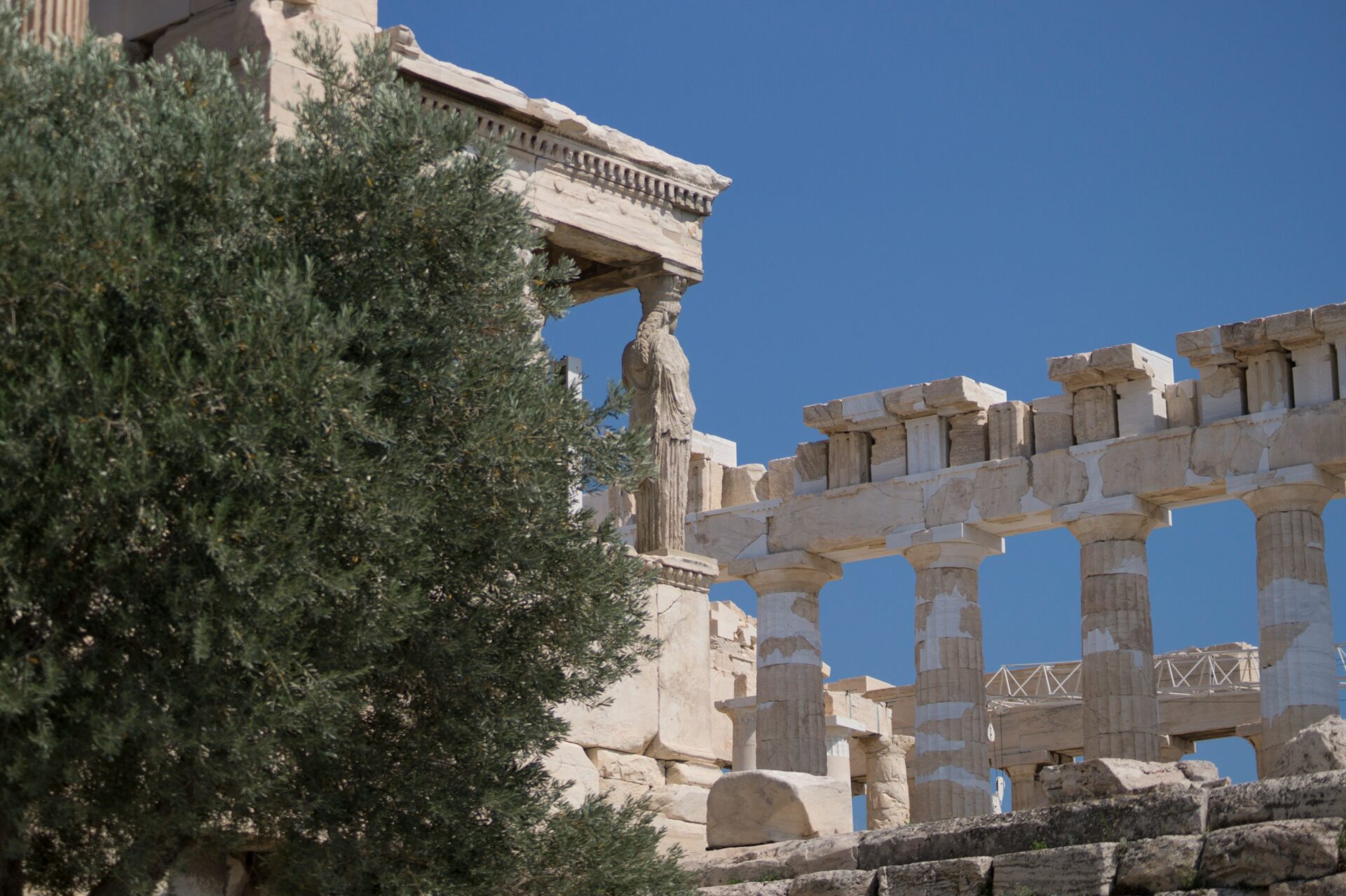
The agricultural traditions, the cultivation of the olive, the grape, and the grain in the specific landscapes of the Greek world, have been practised continuously since the Bronze Age. The same varieties of olive that produced oil for the lamps of ancient Athens are still being harvested in the same landscapes today. Greece as a state featuring a unique ancient history and great civilisation is the most important European country in terms of its cultural heritage, with the richness of Greek history and culture spanning four thousand years; the most ancient in Europe. In May 2026, the Hellenic Ministry of Culture introduced a new comprehensive model to promote Greece’s World Heritage Sites internationally, with twenty UNESCO sites now recognised and an active programme of new designations underway. China-CEE Institute
This continuity is not accidental. It is the result of precisely the stewardship tradition that we examined in Ancient Greece and the Concept of Stewardship, the Greek understanding that what is valuable must be actively maintained and deliberately transmitted rather than simply left to survive on its own.
What Living Heritage Actually Means
The distinction between a finished heritage and a living one is not merely historical. It has direct consequences for what a person can actually do with a heritage, how they can encounter it, relate to it, and become part of it.
A finished heritage can be visited, studied, and admired. You can stand in front of the Colosseum and feel the weight of Roman history. You can walk through the ruins of Persepolis and appreciate the scale of the Achaemenid Empire. You can read the Epic of Gilgamesh and encounter the oldest written narrative in human history. These are genuine and valuable encounters with the past.
But they are encounters with something that has ended. The Colosseum is a ruin. Persepolis is a ruin. The Epic of Gilgamesh was written in a language that died two thousand years ago. The heritage is real, but the living connection to it is mediated, by archaeology, by scholarship, by the imagination required to bridge the gap between the present and a world that no longer exists.
Greek heritage does not require this kind of mediation. It is not a gap to be bridged. What makes Greek culture uniquely stand out is how ancient traditions continue to shape modern society, creating a living connection between the past and the present; not a reconstructed connection or an imagined one, but a direct, unbroken, biological and cultural continuity that requires no scholarly apparatus to access. Greek Courses
You can eat food that is directly descended from the diet of ancient Greeks, the same olives, the same bread, the same wine, grown in the same landscapes, prepared according to the same fundamental principles. You can speak words whose meanings have not changed in three thousand years. You can stand in a grove of olive trees that were producing fruit before the Roman Empire rose and fell, and that are still producing today.
This is what living heritage means. Not heritage about which you can learn. Heritage in which you can participate.
The Three Dimensions of Greek Heritage’s Uniqueness
The uniqueness of Greek heritage can be understood through three specific dimensions that distinguish it from every other major ancient civilisation’s legacy.
The dimension of intellectual continuity
The ideas of ancient Greece did not merely influence subsequent thought. They became the language in which that thought was conducted. The categories of Platonic philosophy, the distinction between appearance and reality, the concept of the ideal form, the relationship between knowledge and virtue, are not historical curiosities that scholars study. They are the conceptual infrastructure of Western thought, still operative in how educated people think about truth, beauty, and justice in 2026.
This intellectual continuity is unique. No other ancient civilisation’s ideas have remained this directly operative in contemporary thought without being substantially mediated or transformed by the civilisations that transmitted them. Greek philosophy reached the modern world in a relatively direct line through the Byzantine tradition, through the Islamic scholars who preserved and developed it, through the Renaissance rediscovery, and arrived essentially intact. The ideas are the same ideas. The problems they address are the same problems.
The dimension of living practice
The cultural practices of ancient Greece, not the dramatic rituals or the athletic competitions, but the everyday practices of food, agriculture, hospitality, and community have been maintained in largely recognisable form across four thousand years of continuous habitation.
The Greek concept of philoxenia, the sacred obligation of hospitality to the stranger, is as operative in contemporary Greek life as it was in the Homeric world. The concept of filotimo, the deep sense of personal honour rooted in community obligation, shapes Greek social relations in ways that a visitor from any other culture immediately notices and that an anthropologist can trace directly to ancient Greek civic values.
And the agricultural practices, above all, the cultivation and harvesting of the olive have been maintained with a fidelity to original method that is extraordinary by any historical standard. Cold pressing, which was the standard method of ancient Greek olive oil production, remains the standard method today. The timing of the harvest relative to the ripening of the fruit, the early harvest that produces the highest polyphenol content and the most complex flavour, is as well understood by contemporary Greek growers as it was by Theophrastus in the fourth century BC.
The dimension of living landscape
The physical landscape of Greece is not a backdrop to its heritage. It is part of the heritage itself; a landscape that has been shaped by four thousand years of continuous human habitation and agricultural practice into something that is simultaneously natural and cultural.
The ancient olive groves of Crete, the Peloponnese, Halkidiki, and the Aegean Islands are the most direct expression of this living landscape. They are not archaeological sites or protected monuments. They are working groves, producing extraordinary oil each harvest, tended by families whose relationship with the specific trees they care for often extends across generations. The landscape they occupy has been shaped by the specific practice of olive cultivation across millennia, the terracing, the drainage, the soil management, the particular combination of tree spacing and canopy management that has evolved over centuries of practice in each specific microclimate.
To stand in one of these groves is not to visit a heritage site. It is to enter a living system that has been continuously inhabited and cultivated for longer than most civilisations have existed.
Why This Matters to the World’s Most Thoughtful Individuals
The individuals who are most seriously drawn to Greek heritage in 2026 are not primarily tourists or classical scholars. They are people who have arrived, through their own paths and in their own ways, at the understanding that living heritage is a categorically different kind of resource from finished heritage, and that the opportunity to participate in it, rather than merely observe it, is genuinely rare and genuinely valuable.
For these individuals, Greece offers something that no other heritage destination in the world can match: the opportunity to become part of a living tradition that has been continuous since antiquity. Not to study that tradition, not to visit its monuments, but to participate in it through the specific, embodied, sensory practice of tasting oil from a specific ancient tree in a specific ancient grove, of standing beside a tree that was producing fruit when your civilisation was young, of accepting the specific obligation of stewardship that the Greek tradition has always understood as the foundation of the human relationship with the living world.
This is the specific quality of Greek heritage that draws the most thoughtful individuals back, not its antiquity, which is shared by other civilisations, not its philosophical achievement, which is extraordinary but mediated, but its living continuity. The fact that you can taste it, touch it, smell it, and accept responsibility for a small part of it, in a form that connects directly and without mediation to the oldest cultivated landscape in Europe.
For the foundational account of what a living legacy is and why it matters now, the Living Legacy Guide provides the comprehensive framework. For the specific argument about why Greece is the birthplace of the legacy concept itself, Why Greece Is the Birthplace of Legacy provides the cultural and historical account. For those exploring the specific regions of Greece where Olea Legacy’s ancient trees are stewarded, The Olive Growing Regions of Greece provides the geographic and terroir detail.
The Ancient Olive Tree as the Point of Entry
For anyone who wishes to move from observing Greek heritage to participating in it, the ancient olive tree is the most direct and most complete point of entry available.
It is alive. It is productive. It connects the person who holds it to the oldest cultivated agricultural tradition in Europe, through a direct and unbroken biological continuity that no monument, no museum, and no scholarship can replicate. It requires the specific quality of attention and care that the Greek stewardship tradition has always understood as the foundation of the human relationship with the living world. And it produces, each autumn, something extraordinary; extra-virgin olive oil that is the direct result of that specific tree’s life in that specific year, in that specific landscape, tended by people whose relationship with it extends across generations.
This is not an encounter with Greek heritage. It is a participation in it, on the same terms and with the same quality of obligation that the ancient Greeks understood when they first began to cultivate these trees in the landscapes that are still producing today.
To explore what that participation involves in practice, the Ownership page provides the full account of how stewardship is structured at Olea Legacy. To begin a private conversation, the Contact page is the appropriate starting point.
Greece’s heritage did not stop. It is still here, still growing, still producing. The question is whether you are part of it.