The Stewardship Economy.
Caring for Ancient Things Is Becoming the World's Most Valuable Practice
We have built our economic world on a specific assumption. The assumption is that value is created through growth. Through building something new. Through making something that did not exist before, or making something better that already existed, or making something cheaper that was previously expensive. The entire architecture of modern economic thinking, from investment returns to GDP to the way we measure individual success, rests on this assumption.
It is, as assumptions go, a productive one. It produced the Industrial Revolution, the technology age, and the extraordinary accumulation of material wealth that defines the world the most fortunate people alive today inhabit. It is not wrong.
But it is incomplete.
It leaves out a category of value that is becoming, quietly, steadily, and with increasing urgency, one of the most significant in the world. The value of caring for what already exists. Of maintaining something ancient and irreplaceable. Of ensuring that the living systems, the cultural traditions, the landscapes and languages and agricultural practices that took centuries or millennia to develop continue to exist in the world for the people who come after.
This is the stewardship economy. It does not replace the growth economy. But it is beginning, in ways that are becoming more visible with every passing year, to claim its own space alongside it, to be recognised as a practice that creates genuine, irreplaceable value that no amount of new creation can substitute.
The Dominant Story and Its Blind Spot
The dominant economic story of our time is built on the opposite assumptions to stewardship. Endless growth, limitless consumption, expanding markets, rising productivity, these ideas shape not only policy but imagination. We have been trained to see more as progress, bigger as success, and enough as a kind of failure of ambition. The permaculture gardener does not ask how to maximise yield, but how to create conditions where everything participates in the health of the whole. This is stewardship: not controlling life, but aligning ourselves with the patterns that allow life to thrive. Heinz Robert, Substack
That blind spot has a specific consequence. It means that the value created by stewardship, by the person who tends an ancient grove so that it continues to produce, by the community that maintains a living cultural tradition so that it is not lost, by the individual who accepts responsibility for something ancient and irreplaceable and ensures its continuation, is systematically undervalued by the metrics we use to measure what matters.
A person who builds a new olive oil company and sells it for a significant sum has created value in terms that the growth economy immediately recognises and rewards. A person who stewards an ancient grove that has been producing extraordinary oil for three centuries, ensuring that it continues to produce for three more, has created value that the same metrics cannot quite capture, because what has been created is not new. It is the continuation of something already old. The preservation of a biological and cultural complexity that could not be recreated from scratch at any price.
This asymmetry is beginning to change.
Why Stewardship Is Becoming Economically Valuable
The shift toward recognising the economic value of stewardship is driven by a convergence of forces that are not going away.
The first is scarcity. The things most worth stewarding, ancient groves, heritage landscapes, traditional craft knowledge, living cultural practices, are finite in a way that manufactured goods are not. No amount of capital, technology, or ambition can create a new ancient olive tree. There is a fixed and diminishing supply of genuinely ancient living things in the world, and the people who accept responsibility for their continuation are, in the most literal economic sense, custodians of an irreplaceable resource.
A core element of the stewardship economy is to support communities in consolidating control over the land and resources on which their stewardship economies are based, thus safeguarding essential landscapes and preserving cultures and traditions. The stewardship economy seeks to create an understanding of stewardship principles among private actors, to encourage the adoption of good stewardship practices. Global Landscapes Forum
The second is recognition. The UHNW individuals and family offices who are most seriously thinking about where value will reside in the next two decades are increasingly arriving at the same conclusion: the things that will be most valuable are those that cannot be replicated. Not the best product in a category that can always produce a better version. But the specific, documented, ancient living thing, the grove that has been tended for centuries, the tradition that has been transmitted across generations, that exists in exactly one form and cannot be substituted.
The third is personal meaning. The stewardship economy is not only, or even primarily, about financial returns. It is about the specific quality of satisfaction that caring for something ancient and irreplaceable provides a satisfaction that the growth economy does not generate in the same form, because the growth economy is oriented toward the future rather than toward the maintenance of what the past produced.
Cultural economies of intangible cultural heritage demonstrate that value is created not only through the production of new goods but through the care, transmission, and continuation of what already exists. The resourcing of living heritage through sharing and caring demonstrates the crucial role of cultural economies as modalities of care in maintaining the robustness and vibrancy of what is irreplaceable. Springer Nature
The Three Things the Stewardship Economy Values
The stewardship economy values things that the growth economy does not have metrics for. Three of them are worth naming, because they are the specific things that ancient olive tree stewardship provides.
Continuity
The growth economy values creation. The stewardship economy values continuation. The ancient olive grove that is still producing today because each generation of stewards accepted the responsibility of its care has created something that could not have been created by any amount of new investment, a continuity of biological and cultural complexity that required centuries of human commitment to achieve and that would be lost in a single generation of neglect.
The value of this continuity is not easily measured. But it is real, and it is irreplaceable. The specific character of oil from an ancient grove reflects the specific complexity of a landscape that has been developing for centuries. That complexity cannot be purchased or manufactured. It can only be inherited and continued.
Care
The growth economy values efficiency. The stewardship economy values care, the specific quality of attention and engagement that ancient living things require and that rewards the person who provides it with a quality of relationship unavailable from any other source.
The systems we need are already encoded in us, in ancestral wisdom, in fungal networks, in villages that never forgot how to care. Ecosystem stewardship is not separate from economics. It is economics in its truest form. Grassroots Economist
The steward of an ancient olive grove who pays genuine attention, who notices the character of this year’s oil compared to last year’s, who visits the grove and understands what the specific conditions of this season produced, who develops over years a genuine knowledge of the specific tree and the specific landscape, is engaged in the specific quality of care that the stewardship economy values and that no efficiency metric can capture or replace.
Transmission
The growth economy values returns. The stewardship economy values transmission, the specific quality of what is passed forward to whoever holds the stewardship next. The steward who passes an ancient grove to the next generation in better condition than they received it has not simply preserved a financial asset. They have transmitted a biological and cultural complexity, a living relationship with a specific ancient landscape, and a specific quality of care and commitment that will be expressed in the character of every harvest the grove produces for the generations that follow.
This transmission is the stewardship economy’s most fundamental value proposition. It is what makes stewardship different from both investment and consumption, not what you receive from it, but what you pass through it to whoever comes after.
Where the Stewardship Economy Is Already Visible
The stewardship economy is not a future concept. It is already emerging, in specific forms, in specific places, in the decisions of specific individuals and institutions.
It is visible in the UHNW family offices that are increasingly asking not only what returns their holdings will produce but what they will leave behind, what the world will look like because they held what they held, and whether the world they leave is richer or poorer for their stewardship.
It is visible in the luxury brands that are beginning to position themselves not as creators of new things but as custodians of ancient practices, the olive oil producer who emphasises the specific age and specific character of their trees rather than the innovation of their process, the wine estate that centres its identity on the specific ancient terroir rather than the technology of its cellar.
It is visible in the growing number of individuals who are choosing, when they ask what to hold next, to choose something ancient rather than something new, something that connects them to a continuity that predates their own life and will outlast it, rather than something that represents the next increment of accumulation.
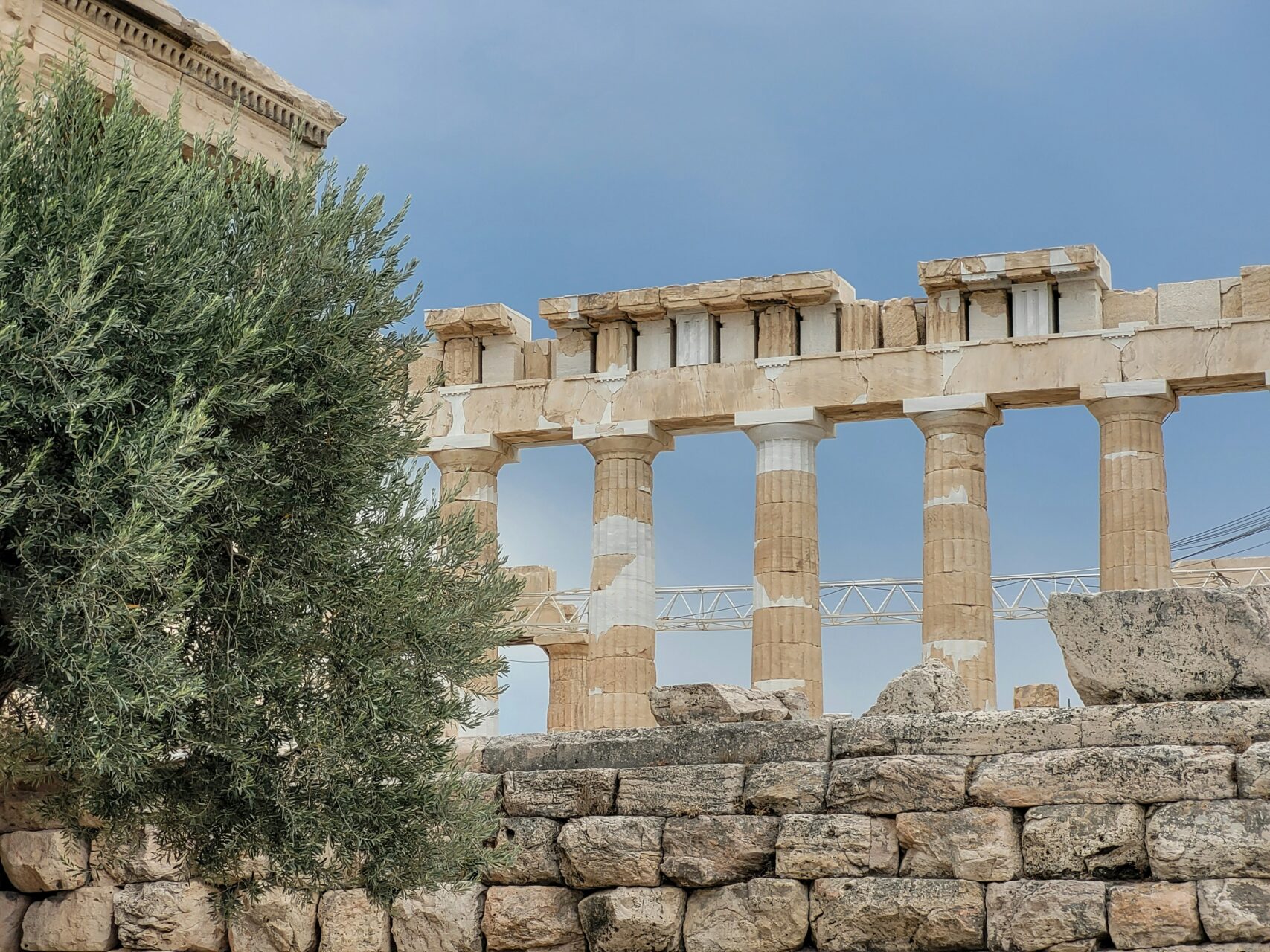
And it is most completely visible in the stewardship of ancient olive trees in historic Greek groves, in the specific practice of accepting responsibility for a living thing that has been here for centuries, tending it with the quality of care that its continuation requires, and passing it forward to whoever comes next in a condition worthy of what was received.
For the foundational account of what a living legacy is and why stewardship is central to it, the Living Legacy Guide provides the comprehensive framework. For the philosophical distinction between ownership and stewardship that the stewardship economy depends upon, The Difference Between Ownership and Stewardship examines it in depth. For the broader conscious luxury movement within which the stewardship economy is emerging in the personal holding space, Conscious Luxury and Beyond Sustainability provide the full context.
The Practice That Was Always There
The stewardship economy did not invent stewardship. Stewardship has always been practised by the farmers who tended the same land across generations, by the craftspeople who maintained the same skills across centuries, by the communities that kept the same languages and traditions alive through periods that would have destroyed them without that specific commitment.
What is new is not the practice. It is the recognition, the growing acknowledgement, in the most sophisticated economic and cultural conversations today, that this practice creates value that the growth economy cannot substitute, that the things most worth caring for cannot be recreated once they are lost, and that the people who accept responsibility for their continuation are doing something genuinely important.
The ancient olive trees of Greece have been waiting for this recognition for a long time. They were being tended by people who understood their value long before any economic framework existed to acknowledge it. What is changing is not the trees. It is us; our growing ability to see that caring for something ancient and alive is not a lesser alternative to building something new.
It is a different and more demanding practice. And in the economy that is beginning to emerge, it is becoming one of the most valuable ones available.
To explore what stewardship of an ancient Greek olive tree involves in practice, the Ownership page provides the full account. To begin a private conversation, the Contact page is the starting point.