Living Assets Versus Traditional Assets.
A New Framework for What We Hold
Most frameworks for thinking about what we hold are financial in origin. They ask about return, about liquidity, about correlation, about risk. They sort holdings into public and private, liquid and illiquid, financial and real, traditional and alternative. These are useful distinctions, and they serve the purpose they were designed for, helping individuals and families understand the financial architecture of their wealth.
But they leave something important unaddressed. They say nothing about what a holding does to the person who holds it over time. Whether it deepens or diminishes. Whether it grows in meaning or simply stores it. Whether it requires something of the holder, attention, care, relationship, or simply sits in a portfolio and accumulates.
There is a distinction that the financial frameworks do not make, and it is one of the most consequential distinctions available for anyone thinking seriously about what they hold and why.
The distinction between a living asset and a traditional one.
What a Traditional Asset Is
A traditional asset, whether a financial instrument, a piece of art, a rare watch, or a case of fine wine, has a fixed relationship with time. It was made or acquired at a particular moment. Its history is behind it. What it accumulates going forward is financial value, or cultural cachet, or both. But it does not grow in the biological sense. It does not produce something new from itself each year. It does not change in response to seasons, or develop a deeper root system, or flower in spring and set fruit in autumn.
A traditional asset is static in the most fundamental sense. It is the same object in ten years as it is today, perhaps more valuable, perhaps better documented, but structurally unchanged. Its relationship with time is essentially passive, it ages rather than grows.
This is not a criticism. Traditional assets serve important purposes, and the finest among them carry genuine beauty and cultural significance. But it is an honest description of what they are and what they do for the person who holds them.
What a Living Asset Is
A living asset is something completely different. It is alive in the literal sense, growing, producing, changing across seasons, responding to its environment, and generating something of genuine value each year from its own biological processes.
The distinction seems obvious when stated this way, but its consequences are not obvious at all. A living asset does not simply store value or accumulate cultural significance. It actively produces. Each year, it generates something that would not exist without it, something that is the direct result of its own life in that specific season, in that specific landscape, shaped by that specific year’s weather, soil conditions, and the skill of the people who tend it.
This production is the central characteristic that makes a living asset different from everything else a person might hold. It means the holding is not passive. It is an ongoing, productive relationship between the holder and a living thing, one that continues regardless of market conditions, regardless of the holder’s other preoccupations, and regardless of how much or how little attention the holder can give it in any particular year.
The tree grows whether or not the holder is watching. The harvest comes whether or not the holder is present. The oil arrives at the table as evidence that the living relationship is continuing, and that the asset is not just stored but actively alive.
The Third Dimension Traditional Frameworks Miss
Financial frameworks measure assets in two dimensions: financial return and risk. The most sophisticated versions add a third, correlation, or how an asset behaves in relation to everything else in the portfolio.
But there is a dimension that none of these frameworks measure, and it is arguably the most important one for a person who has already satisfied the financial objectives of their holdings. It is the dimension of meaning, what a holding contributes to the holder’s sense of who they are, what they are part of, and what they are building across time.
Traditional assets can be meaningful. A painting chosen with genuine discernment, a watch passed from a grandparent, a property in a landscape with deep personal significance, these things carry meaning, and that meaning is real. But the meaning is essentially fixed at the moment of acquisition. It can deepen through memory and association, but the object itself does not generate new meaning. It holds what it was given and reflects it.
A living asset generates new meaning continuously. Each harvest is a new event, a new bottle of oil from a specific tree in a specific year, carrying the character of that season. Each visit to the grove is a new experience, the tree is larger than it was, the landscape is different in this light, the relationship between the holder and the place has developed in ways that a simple re-reading of a balance sheet cannot replicate. The meaning of a living asset accumulates in the same way that meaning accumulates in any genuine relationship, not through the passage of time alone, but through the active, ongoing engagement that the relationship requires and rewards.
How This Framework Applies to Ancient Olive Trees
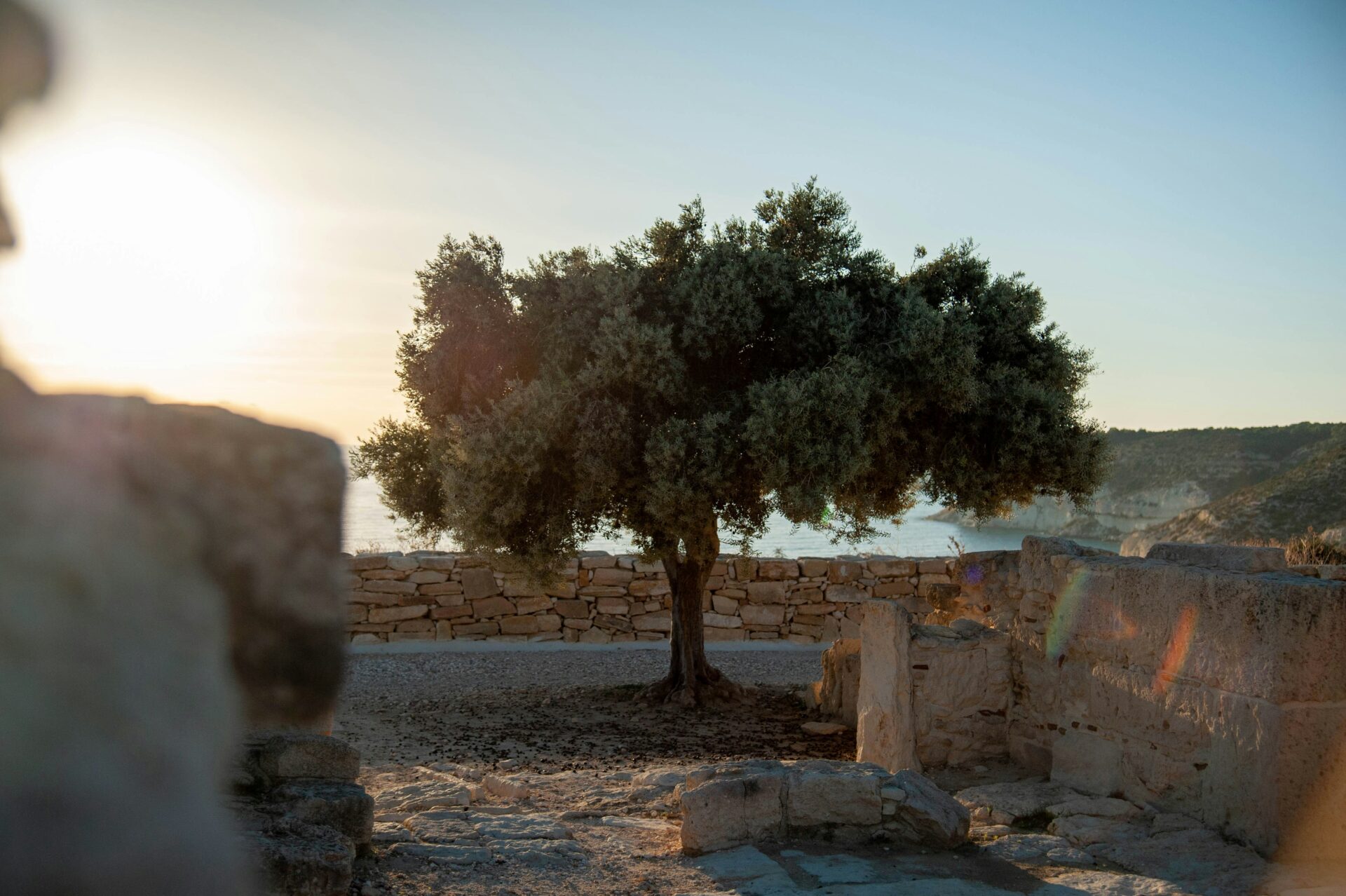
The ancient olive trees of Greece are, in these precise terms, the most complete living assets currently available for personal stewardship anywhere in the world.
They produce something extraordinary from each harvest, ultra-premium extra-virgin olive oil that is the direct result of a specific tree’s life in a specific season. The 2026 High-Net-Worth Asset Allocation Report confirms that 94 per cent of high-net-worth investors now hold private or alternative assets, but none of the frameworks used to categorise these holdings distinguishes between assets that produce meaning and assets that merely store or grow value. An ancient olive tree in Greece does both simultaneously, and in a proportion that no financial instrument approaches. Altrata
They grow in cultural significance with time in a way that has no equivalent in the traditional asset universe. An ancient olive tree that has been stewarded by a family for twenty years carries a depth of accumulated story, relationship, and personal connection that the same tree at the moment of acquisition did not have. The holding deepens culturally, personally and generationally. Each year adds to what it means, not merely to what it is worth.
They connect the holder to a living system, a grove, a landscape, a community of growers, a tradition of cultivation, that extends far beyond the individual holding. Younger UHNW consumers are redefining what luxury means, moving away from traditional status symbols toward experiences, personalisation, and purpose-driven consumption. A living asset in a historic Greek grove satisfies this redefinition completely, it is experiential, deeply personal, and unambiguously purposeful in its contribution to the preservation of an ancient agricultural tradition. Forbes India
And they are irreplaceable in an absolute sense. The Long Angle 2026 asset allocation report confirms that alternative and private assets now constitute 28 per cent of the average high-net-worth portfolio, but the alternatives currently available are overwhelmingly financial in character: private equity, hedge funds, real estate, crypto. None of them are alive. None of them produce something new from themselves each year. None of them deepen in personal meaning with time. The ancient olive tree occupies a category that the existing alternative asset universe does not contain.
Why This Distinction Matters Now
The timing of this framework it corresponds to a specific moment in the development of serious private wealth, a moment that the luxury retail industry’s own analysts describe as the Great Structural Reset, where consumers are no longer just buying products but seeking transformation and asset preservation. Forbes
The individuals most likely to find the living asset framework compelling are those who have already navigated the full spectrum of traditional and alternative holdings and are asking a question that financial frameworks are not equipped to answer: not what produces the best return, but what produces the deepest relationship. Not what grows in value, but what grows in meaning. Not what can be transferred to the next generation as a number on a balance sheet, but what can be passed forward as a story, a responsibility, and a living connection to something ancient and irreplaceable.
Ultra-wealthy individuals often consider purchases within multigenerational contexts, seeking assets that provide current enjoyment while building family heritage and wealth transfer opportunities for future generations. A living asset does all of these things simultaneously, it provides current enjoyment through its annual production, it builds family heritage through its accumulated story, and it creates something to pass forward that is richer and more complex than any financial instrument because they include, alongside the asset itself, the relationship that has been built with it. Altrata
The Portfolio That Includes a Living Asset
A portfolio that includes a living asset alongside its traditional and alternative holdings is not simply more diversified in the financial sense. It is more complete in the human sense. It contains something that no financial instrument, however sophisticated, provides a direct, ongoing, productive relationship with a living thing in a real place, generating something new from itself each year and deepening in personal significance as time passes.
The families and individuals who have arrived at this understanding are not abandoning their financial sophistication. They are extending it into a dimension that financial frameworks do not reach the dimension of meaning, continuity, and living relationship that is the most enduring form of value available to any person with the freedom to choose what they hold.
For the foundational account of what a living legacy is and the broader framework within which living assets sit, the Living Legacy Guide provides the comprehensive overview. For those exploring how an ancient olive tree fits alongside art, wine, and private land as a heritage asset, Beyond Art and Wine addresses the asset class dimension specifically. For the concept of heritage ownership, the conscious practice of holding something of cultural significance as a custodian, What Is Heritage Ownership? provides the full account.
A New Question for What You Hold
The financial frameworks that govern most thinking about private wealth ask: what does this produce financially, and at what risk?
The living asset framework asks a different question: what does this produce, and what does it do to the person who holds it over time?
The second question does not replace the first. It extends it into the territory that the first question cannot reach the territory of meaning, relationship, continuity, and the particular satisfaction of holding something that is still growing when you wake up tomorrow, and next season, and the season after that.
An ancient olive tree in a historic Greek grove is the most complete answer to the second question currently available. It produces something extraordinary each year. It deepens in meaning with every harvest. It connects the holder to a living system of cultural and ecological significance. And it grows, steadily, seasonally, and with complete indifference to whatever else is happening in the world, for as long as it is tended and held.
To explore what holding one involves in practice, the Ownership page provides the full account of how stewardship is structured. To begin a private conversation, the Contact page is the starting point.