Beyond Sustainability.
Why the World's Most Discerning Individuals Are Choosing Regenerative Stewardship
Sustainability had a good run.
For roughly three decades, it was the aspirational standard for luxury brands, conscious consumers, and the institutions that serve them. To be sustainable meant something. It meant you had thought about the impact of what you made, or bought, or held. It meant you had taken steps to minimise the harm. It was a meaningful commitment and, for a long time, a differentiating one.
But somewhere around 2024 and 2025, the most sophisticated people in the conversation began to notice something. Sustainability, as a standard, had become a floor rather than a ceiling. Every major luxury house had a sustainability framework. Every UHNW family office had ESG criteria. Every premium brand had a story about reduced footprint and responsible sourcing. And the result was not differentiation but uniformity; a category in which everyone claimed to be sustainable and the claim had lost most of its signal value.
The most discerning individuals, the ones who had been thinking about this the longest and most seriously, began to ask a different question. Not: are you sustainable? But: what are you actually doing for the world you exist within?
The answer that question demands is not sustainability. It is regeneration.
The Distinction That Changes Everything
The Carbon Underground defines the difference. To be sustainable is to merely survive. To be regenerative is to thrive. Editorial GE
Sustainability is a defensive posture. It means reducing the harm you cause to an acceptable level, extracting less, polluting less, consuming less, damaging less. It is a worthy goal and a necessary one. But it is, at its core, a story about doing less wrong rather than doing more right.
Regeneration is an offensive posture. It does not ask how much harm can be reduced. It asks what genuine good can be created, what can be actively restored, replenished, revitalised. The regenerative standard does not accept a neutral footprint as success. It requires a positive one.
This distinction is philosophical and it has direct consequences for what a conscious luxury holding actually looks like, and what it requires of the person who holds it.
Luxury is moving beyond better materials and lower impact. From regenerative landscapes and biodiversity to heritage craft and smarter systems, five directions are reshaping what sustainable luxury can become. Sustainability in luxury is no longer operating at the margins of the conversation. It has moved into the centre of how luxury is now being discussed and defined. LuxuryNext
Why the Most Thoughtful People Are Making This Shift
The shift from sustainable to regenerative is not an environmental position. It is a philosophical one about what kind of relationship with the world the most thoughtful individuals actually want to have.
There is a specific dissatisfaction that eventually arrives for people who have done all the right things in the sustainability sense, who have made the responsible choices, bought the certified products, supported the ethical brands, measured their carbon footprint and offset what they could not reduce. They have minimised their harm. They have done less wrong. And the question that arrives, quietly, is: is that enough? Is harm minimisation actually the right ambition for someone with the resources to do more than that?
The answer that a growing number of UHNW individuals and families are arriving at is no.
In 2026, the elite demographic values legacy, craftsmanship, and ecological footprint above all else. Premium experiences are increasingly curated around regenerative practices, where high-end hospitality brands actively restore ecosystems rather than just minimise damage. This paradigm shift has forced traditional luxury houses to re-evaluate their core values, transitioning from linear production models to sophisticated circular frameworks. Modern wealth is being redefined as a stewardship responsibility. Tivoli International
What the most thoughtful people want is not neutrality. They want to be a restorative force, to hold something that actively contributes to the health of the world it is part of, that leaves the landscape richer for the holding, and that gives the holder a genuine and specific role in the continuation of something ancient and irreplaceable.
The Three Things Regenerative Stewardship Requires That Sustainability Does Not
The shift from sustainable to regenerative is not just a higher level of environmental commitment. It is a different kind of commitment that asks three specific things of the holder that the sustainability framework does not require.
Active contribution, not passive compliance
The sustainable consumer chooses the product with the better environmental credentials. The regenerative steward does something more specific: they participate in the active maintenance and restoration of a living system that would degrade without their involvement.
This is not the same thing, even when the environmental outcome is similar. The difference is in the quality of relationship between the person and the system they are contributing to. Passive compliance is a transaction. Active contribution is a relationship in which the steward’s specific engagement makes a specific difference to the specific condition of a specific living thing.
Travellers are no longer satisfied with simply reducing their environmental impact or leaving no trace. Instead, there is a surge in demand for experiences that actively restore, replenish, and revitalise the environment, culture, and economy of the destination. In 2026, UHNW clients are leading this revolution. Vincent Vacations
Specificity, not abstraction
Sustainability is often abstract. Carbon credits are traded for forests the buyer will never see. Environmental certifications are granted based on systems the consumer did not design and cannot monitor. The relationship between the conscious purchase and the environmental outcome is real but distant and mediated.
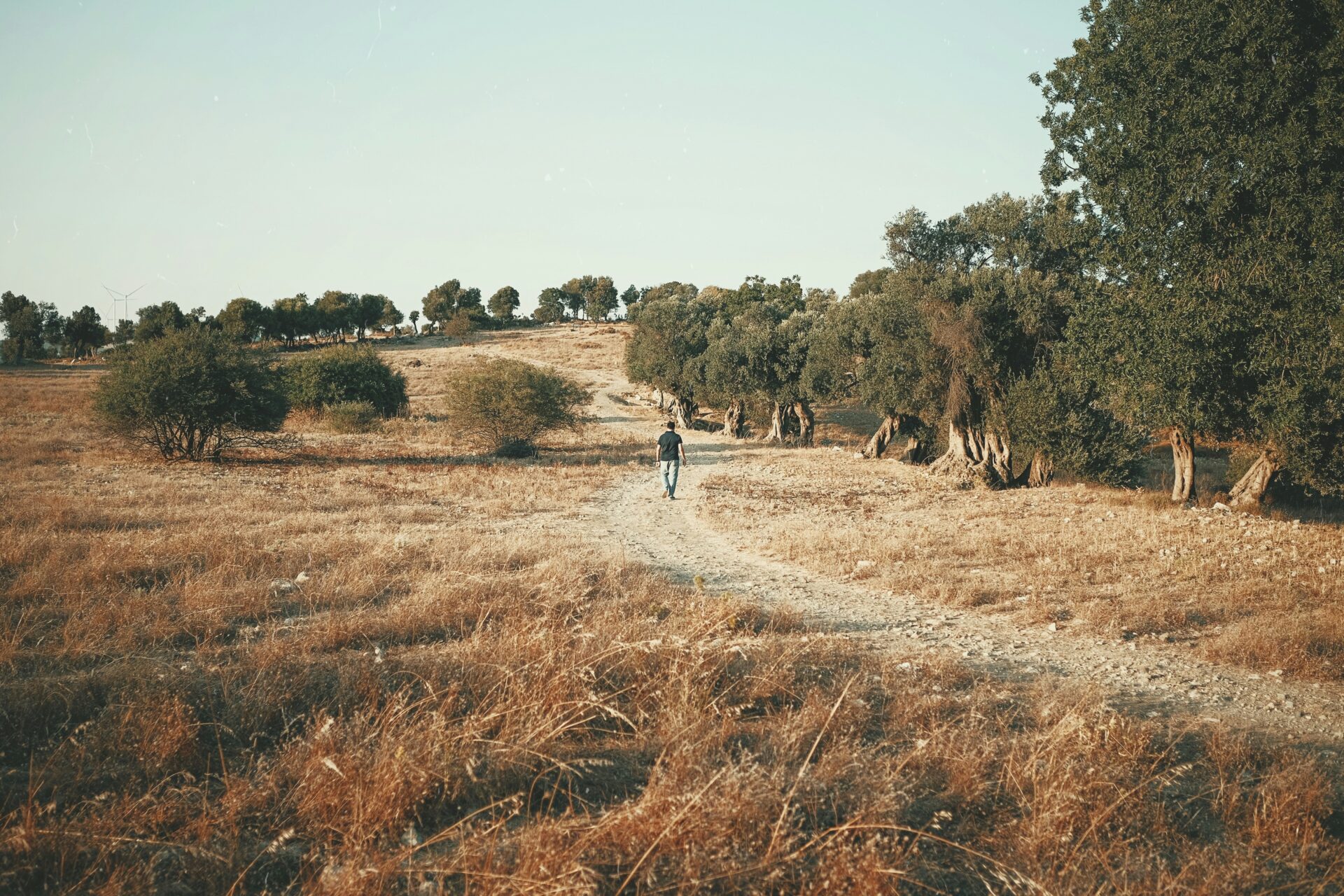
Regenerative stewardship is specific. It involves a specific living thing in a specific place, tended by specific people, producing something specific each year. The steward of an ancient olive grove knows which trees are theirs. They know roughly where in Greece those trees are. They receive the olive oil their specific trees produce. The connection between their stewardship and the environmental outcome is direct, biological, and annual, not abstract, mediated, or theoretical.
Long-term commitment, not single purchases
The sustainable consumer makes better choices in individual transactions. The regenerative steward makes a commitment to a specific place, a specific living system, a specific ongoing relationship that requires ongoing engagement. The commitment is not discharged at the moment of purchase. It is renewed each year, with each harvest, with each visit to the grove, and eventually with the decision to pass the stewardship forward to whoever comes next.
This long-term commitment dimension is what gives regenerative stewardship its specific quality of meaning. It is not a choice made once. It is a practice maintained across time, and it produces, through that maintenance, the specific satisfaction of knowing that what you are doing is genuinely making a difference to something real and alive.
Why an Ancient Greek Olive Grove Is the Most Complete Personal Expression of Regenerative Stewardship
The ancient olive grove satisfies the regenerative standard more completely than almost any other personal holding available.
It actively restores. Ancient olive trees sequester carbon continuously throughout their extraordinarily long biological lives. Their root systems stabilise soil that would otherwise erode. The biodiversity they support, the insects, birds, and plant species that inhabit a well-maintained ancient grove, is significantly richer than a landscape without them. The traditional cultivation methods used in ancient Greek groves, no synthetic pesticides, no chemical fertilisers, minimal intervention in the natural biological cycles of the landscape, actively support rather than diminish the ecological health of the land they occupy.
People are no longer just buying a brand. They are investing in a specific piece of earth. They are choosing to support farmers who act as guardians of the topsoil. True luxury is the knowledge that your lifestyle is a restorative force. Editorial GE
It preserves what cannot be recreated. The ancient olive trees of Greece are irreplaceable in an absolute and literal sense. There is no process by which a new ancient tree can be made. The biodiversity encoded in centuries of cultivation in a specific landscape cannot be reconstituted if it is lost. To steward an ancient grove is not simply to reduce harm. It is to actively ensure the continuation of something that would diminish without genuine human commitment to its care.
It connects the holder to a system that gives back more than it takes. An ancient olive tree does not consume the steward’s resources and return nothing. It produces something extraordinary from its own biological processes; ultra-premium extra virgin olive oil of a quality and character that reflects the specific health of the landscape, the specific skill of the people who tend it, and the specific conditions of the year that produced it. The steward is not paying for the absence of harm. They are participating in the creation of something genuinely good, and the olive oil that arrives at their table each autumn is the annual evidence of that participation.
Conscious Luxury as the Next Standard
The most forward-looking UHNW individuals and family offices today are not asking whether their holdings are sustainable. They are asking whether their holdings are genuinely conscious, whether each thing they hold actively contributes to a world worth living in, rather than simply failing to make it worse.
This is a higher standard. It is also a more personally satisfying, because it transforms the relationship between the holder and their holdings from compliance to contribution, from passive choice to active participation, from doing less wrong to doing something genuinely right.
For the foundational account of what a living legacy is and why conscious stewardship is central to it, the Living Legacy Guide provides the comprehensive framework. For the environmental science of what ancient olive trees specifically contribute to the landscapes they inhabit, Olive Tree Carbon Sequestration provides the detailed account. For the broader philosophical framework of stewardship as a practice of responsibility rather than a consumer choice, The Difference Between Ownership and Stewardship examines the distinction in depth.
An ancient olive grove in Greece is already doing what the regenerative standard asks. It has been doing it for centuries, sequestering carbon, preserving biodiversity, sustaining traditional agricultural communities, and producing something extraordinary from the health of a landscape that has been carefully tended across generations.
The question is not whether the grove is regenerative. The grove does not need our certification. The question is whether we are ready to be part of it.
To explore what stewardship of an ancient Greek olive grove involves in practice, the Ownership page provides the full account. To begin a private conversation, the Contact page is your starting point.