
Time Is the Ultimate Luxury.
The Ancient Olive Tree Is Its Most Complete Expression
Every era turns its rarest resource into its highest form of luxury. When food was scarce, abundance was luxury. When information was scarce, knowledge was luxury. When access to distant places was limited, travel was luxury. The thing that distinguishes a particular era’s luxury from all previous eras is not the price of what is desired but the scarcity of what is genuinely unavailable to most of the people in that era, regardless of their wealth.
Today, the rarest resource is not food, information, or access. Every era turns its rarest resource into its highest form of luxury. Today, that resource is uninterrupted attention, genuine rest, and the freedom to live without constant mental noise. The American Reporter
But beneath this observation which is correct as far as it goes, is a more fundamental scarcity that drives all the others. It is not attention alone that is rare. It is the specific quality of temporal experience that genuine attention makes possible: the experience of inhabiting time rather than consuming it.
This is what the world’s most discerning people are seeking today. Not more time in the quantitative sense, not additional hours or additional years. But a different quality of relationship with the time they already have. The experience of time that is genuinely present, genuinely inhabited, and genuinely oriented toward something that will still matter when the moment has passed.
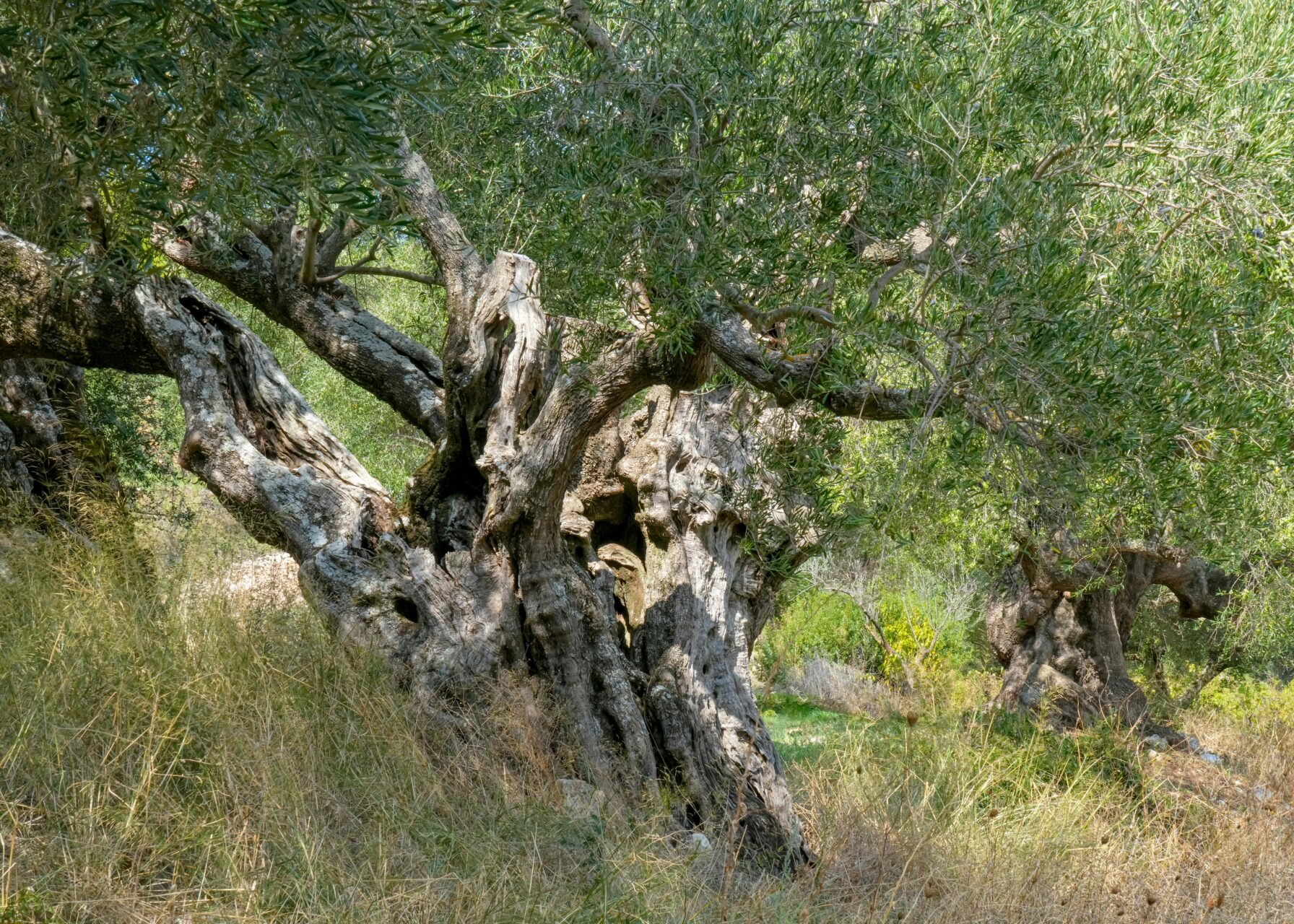
And it is the ancient Greek olive tree that offers this quality of temporal experience in its most complete available form.
Why Time Has Become the Scarcest Resource at the Highest Level
The paradox at the heart of UHNW life today is rarely discussed directly. The individuals who have built the greatest financial wealth, who have, in theory, the greatest freedom to allocate their time however they choose, consistently report the strongest feelings of time pressure and time scarcity.
Although we are inclined to attribute growing feelings of time pressure to people having less free time than earlier generations, there is very little evidence to support this conclusion. Instead, decreasing feelings of time affluence are more likely related to increasing wealth. As incomes have risen around the world, so too have feelings of time pressure. When any resource becomes more financially valuable, commodity theory tells us it is also perceived as more scarce. The unintended consequence of increasing wealth is a growing sense that time is precious and finite. Birch Street Financial Advisors
This is the specific form of scarcity that defines the UHNW experience of luxury today. It is not material scarcity. It is temporal scarcity; the acute awareness that the most valuable resource available is the one that no financial instrument can create more of, no asset allocation can optimise, and no efficiency improvement can extend.
Today, the true currency of luxury travel is time. Not just its scarcity, but an acute awareness of its preciousness. Spear’s WMS. The observation applies beyond travel. The true currency of luxury today across every category, is time. Not time saved, not time freed, not time optimised. But time inhabited with the quality of attention that its scarcity demands.
The Difference Between Consuming Time and Inhabiting It
The contemporary luxury market has been extraordinarily effective at offering what might be called time consumption; the filling of time with impressive, stimulating, and expensive content. Extraordinary restaurants, extraordinary destinations, extraordinary performances, extraordinary encounters of every description. The luxury calendar of the UHNW individual today is typically full, not just full, but curated, optimised, and sequenced to ensure that no available hour is underutilised.
But this efficiency of filling is not the same as the experience of inhabiting time. It is, in a precise psychological sense, its opposite.
The experience of inhabiting time is the experience of being genuinely present in a specific moment of having enough quality of attention available to actually be in the place you are, actually be in the relationship you are in, actually be in the season that is happening around you. It is the specific quality of temporal experience that the research literature consistently identifies as the foundation of genuine wellbeing, and the specific quality that the constant stimulation of the optimised luxury calendar most systematically prevents.
High-net-worth individuals are no longer satisfied with luxury for its own sake. Instead, they are pursuing experiences that allow them to slow down and savour each moment, curating journeys that are meaningful, restorative, and deeply personal. Luxury travellers are shifting toward longer, slower, and more private itineraries. Forbes
What is being sought in this shift toward slower, longer, more private, more restorative experiences, is the specific quality of inhabited time. Not the next impressive thing but the experience of being genuinely present in a place, a relationship, or a living reality for long enough that the quality of presence itself becomes the value rather than the content that fills it.
Luxury is no longer defined by speed. It is defined by the quality of lived time. At the heart of slow luxury lies a simple yet powerful idea: reclaiming a quality of attention that has become increasingly rare in a hyperconnected world. LuxuryWorld
The Timescale That No Human Urgency Has Ever Touched
Every form of luxury that involves time, every slower journey, every more private retreat, every more restorative experience, ultimately operates on human time. It is designed by humans, offered at human pace, and concluded within a timeframe determined by human schedules.
The ancient Greek olive tree operates on a different timescale.
It does not respond to urgency. It does not have a checkout time. It is not designed to conclude at a moment that suits the constraints of the guest’s diary. It flowers when the biological conditions of the spring are right. It sets fruit when the summer allows. It is harvested when the specific character of the olives in this specific grove in this specific year has reached the point that the growers’ accumulated knowledge identifies as optimal, earlier in a warm autumn, later in a cool one, different in every year and every grove.
The tree has been operating on this timescale for centuries. Wars, empires, economic crises, and technological revolutions have come and gone entirely within the span of its continuous biological life. The human urgency that pervades even the most carefully curated luxury experience, the awareness that this is a finite time away from the demands of the life that continues, has never touched it. It does not know about that life. It knows only the soil it grows from, the rain that falls on it, the sun that ripens its fruit, and the hands of the people who tend it with the accumulated knowledge of generations.
The person who holds an ancient olive tree enters, through that relationship, into a different quality of temporal experience than any other luxury holding can provide. Not the time of a week’s retreat in a private resort however beautiful and however well curated. Not the time of a long yacht charter through a spectacular archipelago however intimate and however immersive. But the time of a living thing that has been growing before any of those experiences existed and that will be growing long after every human memory of them has faded.
What It Means to Be in a Time-Relationship With Something Ancient
The annual arrival of extra-virgin olive oil from a specific ancient tree in a specific Greek grove is, in the precise language of temporal experience, a different kind of encounter with time than anything else the contemporary luxury world offers.
It is not time saved or time freed. It is time marked, by the arrival of something that the specific passage of this specific year produced, that could not have been produced by any other year’s passage, and that carries within it the specific character of the season that created it.
The steward who receives that olive oil each autumn and pays genuine attention to what it offers, how it differs from last year’s pressing, what character this year’s weather contributed, how the specific grove’s microclimate expressed itself in the particular quality of this season’s harvest, is engaging in the specific quality of temporal attention that time as a luxury actually requires. They are inhabiting time rather than consuming it. They are in a genuine relationship with the passage of a year, expressed through the oil that the passage of that year produced.
Many affluent travellers view time as their scarcest resource and are reallocating discretionary budgets toward experiences that feel worth the investment of the hours they require. The Traveler. The ancient olive tree offers something that the most carefully curated travel experience cannot: a relationship with time that does not require the steward to be present in Greece during the harvest to be in genuine relationship with it. The oil arrives wherever the steward is. The season that produced it arrives with it. The living relationship with a specific ancient thing in a specific ancient landscape arrives at the table as a sensory encounter with the time that passed while the steward was living their life elsewhere.
This is time as luxury in its most complete form. Not time away from life. Time arrived at the table from a place that continues to exist in full biological reality regardless of whether the steward is there to witness it.
The Long View. Time Across Generations
There is one final dimension of the relationship between an ancient Greek olive tree and time that no other luxury holding approaches.
The tree has already outlived every person who is alive today. It will outlive every person currently alive. The oil it produces this autumn is one in an unbroken sequence of annual harvests that extends back centuries and will extend forward into a future that no current human being will witness.
The steward who holds this tree is not simply in a different relationship with their own time. They are in a relationship with a timescale that utterly dwarfs their own; a timescale that existed before them and will continue long after them, that is indifferent to their individual urgency and their individual finitude in the most serene and most complete way available.
This is the temporal experience that the most sophisticated individuals are seeking today, even if they have not yet found the language for it. Not the experience of time freed from obligation, that is a fine thing, but it is a human-scale experience, bounded by the same finitude that makes time scarce in the first place. But the experience of being in genuine relationship with a timescale that is not bounded by human finitude of holding something that will still be here when every current urgency has become irrelevant, and that offers, in that specific quality of presence, the most honest available antidote to the specific form of temporal scarcity that wealth creates.
For the foundational account of what a living legacy is and why a different quality of relationship with time is central to it, the Living Legacy Guide provides the comprehensive framework. For the concept of continuity, the closest related concept in the Olea Legacy canon, Why the World’s Greatest Luxury Is Continuity examines the unbroken relationship with something alive across time. For the broader context of slow luxury as the movement within which this understanding of time sits, What Is Slow Luxury? provides the full account.
The Rarest Thing Available
The rarest thing available in the world today is not a limited-edition object, a private island, or access to an experience that only a handful of people have had. It is the experience of inhabiting time, of being genuinely present in a living relationship with something that operates on a timescale larger than human urgency.
The ancient olive trees of Greece have been offering this experience for centuries. They offered it to the Greeks who first cultivated them. They offered it to every steward who has held them across the generations since. And they offer it today to the person who is ready to enter a relationship with something that has no interest in their schedule, no awareness of their deadlines, and no relationship with time except the one that centuries of biological life have established.
That relationship, entered through the stewardship of a single ancient tree, is the most complete expression of time as a luxury available anywhere in the world today.
To explore what that relationship involves in practice, the Ownership page provides the full account of how stewardship is structured at Olea Legacy. To begin a private conversation, the Contact page is the appropriate starting point.